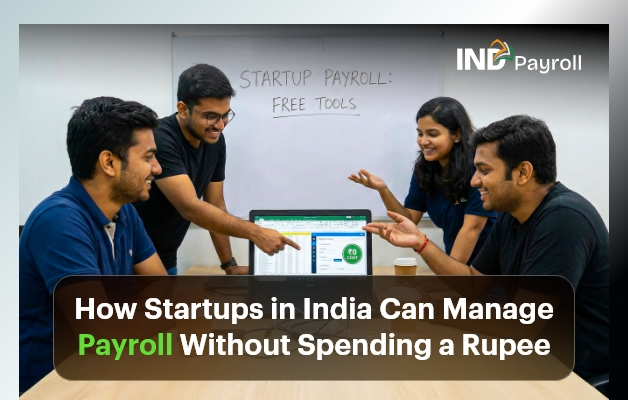
How Startups in India Can Manage Payroll Without Spending a Rupee?

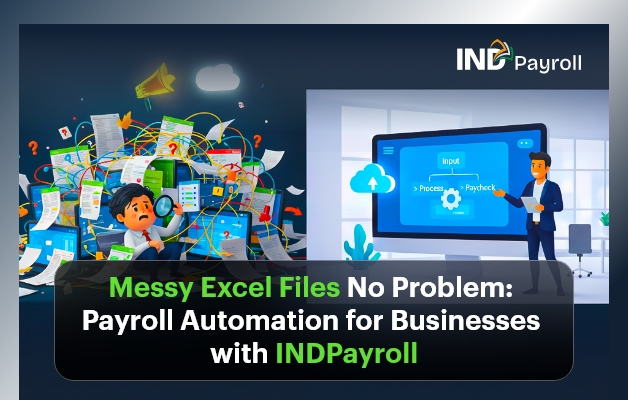
Every startup in India reaches a point where payroll feels unavoidable — and expensive. Salaries must go out on time. Compliance must be maintained. Records must be clean. Yet, at the early stage, spending on payroll software or consultants often feels unjustifiable. The reality is simpler than most founders believe. With the right approach, Indian startups can manage payroll without spending a rupee — without risking compliance, accuracy, or team trust.

This guide walks you through exactly how to do that, step by step, while keeping things practical and sustainable.
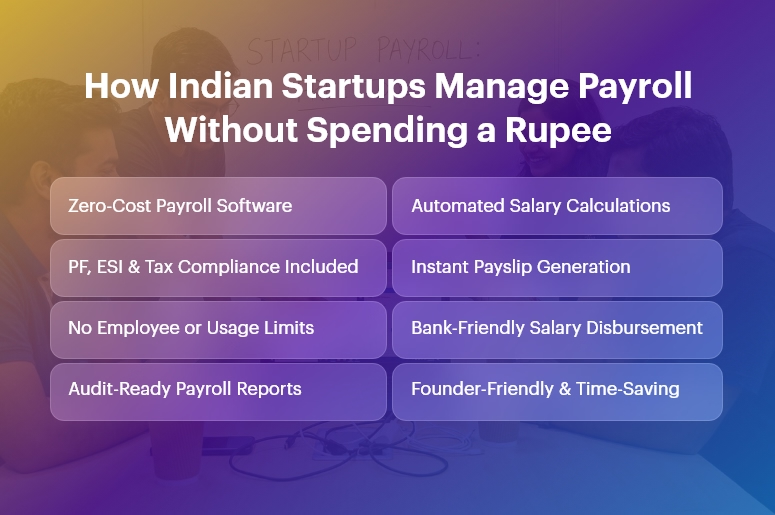
How Indian Startups Manage Payroll Without Spending a Rupee

Why Payroll Feels Expensive (Even When It Doesn’t Have to Be)

Payroll becomes expensive not because of statutory requirements, but because of fragmentation. Startups juggle spreadsheets, compliance portals, consultants, and reminders — each adding friction and hidden costs. Over time, founders end up paying for “convenience” rather than necessity.

However, once you centralize payroll logic and remove manual dependencies, it becomes entirely possible to manage payroll without spending a rupee, even as your team grows.

What It Really Means to Manage Payroll Without Spending a Rupee

Managing payroll for free does not mean cutting corners or ignoring compliance. Instead, it means removing unnecessary intermediaries while keeping statutory accuracy intact.

At a high level, when startups manage payroll without spending a rupee, they rely on:

  • Pre-built payroll logic instead of manual calculations
  • Built-in compliance handling rather than external consultants
  • One system instead of multiple disconnected tools

This shift alone eliminates most payroll-related expenses.

Understanding Payroll in the Indian Startup Context

Before implementing any system, founders must understand what payroll actually includes. Payroll is not just salary payment — it is a structured financial and compliance process.

At its core, Indian payroll consists of:

  • Salary structure (basic, allowances, deductions)
  • Statutory compliance (PF, ESI, PT, TDS)
  • Documentation (payslips, registers, reports)

Once these components are clearly defined, it becomes much easier to manage payroll without spending a rupee.

Why Manual Payroll Works — But Only Temporarily

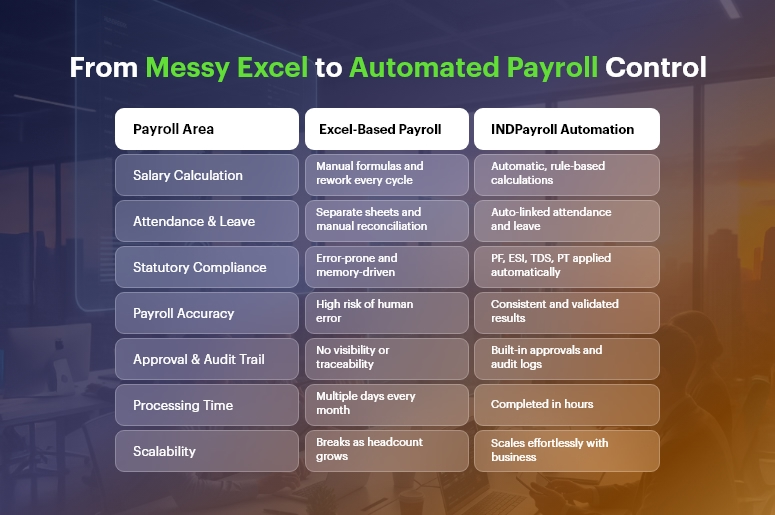
Many startups begin with spreadsheets. Initially, this approach feels cost-effective and flexible. Founders manually calculate salaries, track attendance, and upload compliance data on government portals.

However, as months pass, cracks appear:

  • Formula errors creep in
  • Compliance dates get missed
  • Founders become bottlenecks
  • Scaling becomes painful

At this stage, startups realize that “manual” is free in money, but expensive in time. To truly manage payroll without spending a rupee, automation becomes essential.

India’s #1 Free Software

Free Payroll, PF,
ESI & TDS Software

Professional compliance management for Indian businesses. 100% Free Forever.

The Shift from Manual to Smart-Free Payroll

The smartest startups do not jump from spreadsheets to paid tools. Instead, they move to free payroll platforms designed specifically for Indian compliance.

These platforms combine automation, compliance logic, and reporting — without charging subscription fees. As a result, startups retain control while eliminating repetitive work.

This is the turning point where startups successfully manage payroll without spending a rupee, month after month.

What a Truly Free Payroll System Must Offer

Not all “free” tools are actually free. Some restrict features, others limit employee count, and many introduce paid upgrades later. To genuinely manage payroll without spending a rupee, a system must include the following at no cost:

  • Automated salary calculations based on Indian pay structures
  • Built-in PF, ESI, and tax deduction logic
  • Instant payslip generation
  • Compliance-ready reports for audits and filings
  • No employee limits or hidden charges

Without these, founders eventually end up paying — either in money or effort.

How Payroll Compliance Becomes Easier — Not Harder

One common fear is that free payroll systems compromise compliance. In practice, the opposite is true.

When payroll logic is automated:

  • Statutory deductions are calculated correctly every month
  • Compliance reports are generated instantly
  • Filing deadlines are easier to track

This allows startups to manage payroll without spending a rupee while staying audit-ready and penalty-free.

Paying Employees Without Paying Payroll Vendors

Salary disbursement does not require paid payroll services. Indian startups can easily pay employees using existing banking infrastructure.

Most teams rely on:

  • Bank transfers (NEFT/IMPS)
  • Bulk upload salary files
  • Zero-cost business banking features

When combined with automated payroll calculation, this completes the cycle of how to manage payroll without spending a rupee.

India’s #1 Free Software

Free Payroll, PF, ESI & TDS Software

Where INDPayroll Fits Naturally

Some platforms are built with monetization as the priority. Others are built with startups in mind.

INDPayroll belongs to the second category.

It allows Indian startups to:

  • Run complete payroll cycles
  • Handle PF, ESI, and tax deductions
  • Generate payslips and reports
  • Stay compliant

All without charging a single rupee.

This makes INDPayroll not a “free trial,” but a permanent free payroll solution — ideal for startups that want simplicity without compromise.

When Free Payroll Makes Strategic Sense

Free payroll is especially effective when:

  • You are bootstrapped or early-stage
  • Your team is small to mid-sized
  • You want predictable, zero-cost operations
  • You prefer clarity over complexity

In these scenarios, paying for payroll software offers little incremental value.

Final Thoughts

Indian startups no longer need to choose between accuracy and affordability. Today, it is entirely possible to manage payroll without spending a rupee — while remaining compliant, organized, and scalable.

By replacing fragmented manual processes with a unified, free payroll system, founders reclaim time, reduce risk, and preserve capital.
Payroll should not be a financial burden.

It should be invisible, reliable, and cost-free.

And now, it finally is.

Free Payroll, PF, ESI & TDS Software

The most trusted automation tool for modern Indian businesses.
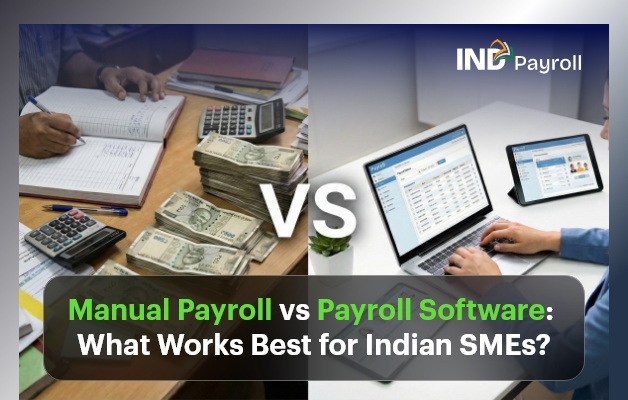
Manual Payroll vs Payroll Software: What Works Best for Indian SMEs?

Managing payroll remains a critical but complex task for Indian small and medium enterprises (SMEs). Today, we compare Manual Payroll vs Payroll Software to determine what works best for Indian SMEs. We also explain the key differences, benefits, challenges, costs, and best practices.

In India, SMEs must handle salary calculations, statutory compliance, tax deductions, and employee records efficiently. Traditionally, many businesses relied on manual payroll processes. However, with rising workforce sizes and regulatory complexity, payroll software has emerged as a powerful alternative.

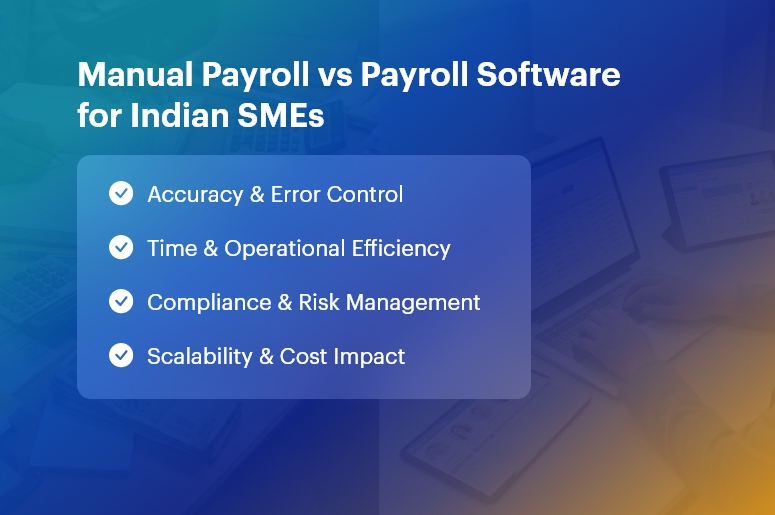
 Manual-Payroll-vs-Payroll-Software-for-Indian-SMEs

What is Manual Payroll?

Manual payroll refers to processing employee salaries, deductions, and statutory contributions by hand or using spreadsheets.

Many SMEs still choose manual payroll because it seems cheaper or familiar. Nevertheless, it carries risks and becomes less sustainable as the business grows.

How Manual Payroll Works?

  • HR or accounts personnel calculate gross salary
  • Deduct taxes, PF, ESI, professional tax manually
  • Prepare pay slips in spreadsheets
  • Record payments in books
  • Remit statutory contributions manually

What is Payroll Software?

Payroll software automates payroll processing through specialized digital tools. These systems calculate salaries, generate slips, manage compliance, and store reports automatically.

Cloud-based software further enables online access and multi-user collaboration.

Payroll software typically includes:

  • Automated salary calculations
  • Tax computation and filing support
  • Digital payslips and records
  • Compliance updates for Indian laws
  • Integration with attendance systems

Key Differences: Manual Payroll vs Payroll Software

1. Accuracy

Manual payroll often causes human errors in calculations and compliance. In contrast, payroll software uses automated formulas that reduce errors significantly.

2. Time Efficiency

Manual payroll demands extensive time for calculations and reconciliation. Conversely, payroll software completes processing within minutes, even for large teams.

3. Compliance Management

India’s statutory requirements (PF, ESI, TDS, professional tax) change frequently. Manual payroll struggles to keep up, while software updates automatically with regulatory changes.

4. Cost Considerations

Manual payroll appears inexpensive at first but generates hidden costs in:

  • Wages spent on processing
  • Error corrections
  • Penalties due to non-compliance

Payroll software requires a subscription fee but reduces long-term costs by improving accuracy and saving time.

5. Scalability

Startups and SMEs grow quickly; manual payroll cannot scale easily. Payroll software handles growth efficiently, whether you add 5 or 500 employees.

Free Payroll, PF, ESI & TDS Software

The most trusted automation tool for modern Indian businesses.
Benefits of Payroll Software for Indian SMEs

1. Improved Accuracy

Payroll software eliminates manual calculations and minimizes errors. It also maintains precise records.

2. Faster Payroll Cycles

Automated processes save hours every month, leading to faster salary disbursements.

3. Better Compliance

Software tracks regulatory updates and automatically applies new rates for PF, ESI, and taxes.

4. Secure Data Storage

Cloud payroll platforms secure sensitive payroll data and reduce risks from lost spreadsheets.

5. Real-Time Reporting

Finance teams get instant access to payroll reports, aiding planning and audits.

Challenges of Manual Payroll for SMEs

1. Human Error

Manual entry increases the likelihood of mistakes in salary calculations and compliance.

2. Time-Consuming

Processing payroll manually drains valuable HR and finance resources.

3. Compliance Risks

Manual systems often fail to capture regulatory changes, causing legal penalties.

4. Lack of Integration

Manual payroll rarely integrates with attendance, leave, or accounting systems.

When Manual Payroll Might Still Work

While payroll software is superior for most, very small businesses with fewer than 10 employees and simple salary structures may find manual processing workable initially.

However, as businesses grow, transitioning to payroll software becomes essential.

Key Features to Look for in Payroll Software

When selecting payroll software, Indian SMEs should evaluate:

  • Compliance with Indian laws
  • Automatic tax and statutory calculations
  • Integration with attendance and HR systems
  • Cloud access and mobile support
  • Secure data storage
  • Customizable payslip formats
  • Customer support and training

Cost Comparison: Manual vs Payroll Software

In most cases, payroll software provides a higher return on investment than manual payroll over time.

Transitioning from Manual to Payroll Software

To transition smoothly:

  • Evaluate current payroll needs
  • Select software that fits your budget
  • Migrate historical data carefully
  • Train HR and finance teams
  • Review and monitor during the first few cycles
India’s #1 Free Software

Free Payroll, PF, ESI & TDS Software

Conclusion

In the debate of Manual Payroll vs Payroll Software, payroll software consistently proves more efficient, accurate, and cost-effective for Indian SMEs. While manual payroll may work for very small teams, it cannot match the scalability, compliance support, and automation that payroll software delivers.

Indian SMEs that adopt payroll automation reduce errors, save time, and stay compliant in a complex regulatory environment. Therefore, payroll software is the best long-term solution for growing businesses.

Frequently Asked Questions (FAQs)

1. What is the main difference between manual payroll and payroll software?

The primary difference between manual payroll vs payroll software lies in automation and accuracy. Manual payroll depends on spreadsheets and human calculations, whereas payroll software automates salary processing, tax deductions, compliance, and reporting, thereby reducing errors and saving time.

2. Is manual payroll legal for Indian SMEs?

Yes, manual payroll is legal in India. However, SMEs must still comply with statutory regulations such as PF, ESI, TDS, and professional tax. Because regulations change frequently, manual payroll increases the risk of non-compliance and penalties.

3. Why is payroll software better for compliance in India?

Payroll software automatically updates statutory rules related to Indian payroll laws. As a result, it ensures accurate PF, ESI, and tax calculations and helps SMEs remain compliant without constantly tracking regulatory changes manually.

4. How does payroll software reduce payroll errors?

Payroll software minimizes errors by automating salary calculations, deductions, and statutory contributions. Since the system follows predefined rules, it eliminates common human mistakes that occur in manual payroll processing.

5. Is payroll software expensive for small businesses?

Payroll software is generally affordable for Indian SMEs. Although it involves a subscription cost, it reduces long-term expenses by saving time, preventing compliance penalties, and improving payroll efficiency compared to manual payroll.

6. When should an SME switch from manual payroll to payroll software?

An SME should switch to payroll software when employee strength increases, compliance becomes complex, or payroll errors start affecting operations. In most cases, businesses benefit from payroll automation as soon as they begin scaling.

7. Can payroll software handle Indian tax structures and deductions?

Yes, modern payroll software supports Indian salary structures, tax slabs, exemptions, PF, ESI, professional tax, and TDS. Therefore, it simplifies payroll processing in India and ensures statutory accuracy.

8. Does payroll software integrate with attendance and HR systems?

Most payroll software solutions integrate seamlessly with attendance, leave management, and HR systems. Consequently, salary calculations become more accurate, and HR teams gain better operational visibility.

9. Is payroll data secure in cloud-based payroll software?

Reputable payroll software providers use encryption, access controls, and regular backups. As a result, cloud payroll systems often provide higher data security than spreadsheets used in manual payroll.

10. What works best for growing Indian SMEs: manual payroll or payroll software?

For growing Indian SMEs, payroll software works best. It supports scalability, ensures compliance, reduces errors, and saves time. In contrast, manual payroll becomes inefficient and risky as business complexity increases.

India’s #1 Free Software

Free Payroll, PF,
ESI & TDS Software

Professional compliance management for Indian businesses. 100% Free Forever.

Salary Structure in India: Components, Deductions & Best Practices

In India, payroll errors remain one of the top three causes of compliance penalties for small and mid-sized businesses.

Despite growing digitization, many organizations still rely on spreadsheets and outdated rules to design their salary structure in India — leading to tax inefficiencies, PF/ESI miscalculations, and employee dissatisfaction.

As we move into 2025, the complexity has only increased. Regulatory updates, evolving tax regimes, and a more informed workforce mean that salary design is no longer just an HR activity — it is a strategic finance decision.

This guide breaks down the salary structure in India in a clear, practical way. You will learn the core components, statutory deductions, and best practices to design compliant, tax-efficient, and scalable salary structures. More importantly, you will see how modern payroll automation helps businesses eliminate risk, reduce costs, and improve employee trust — without increasing operational effort.

Salary-Structure-in-India-Key-Components-Their-Purpose

6 Key Components of Salary in India

  1. Basic Salary: The foundation of the salary structure in India, usually 30–50% of CTC. It directly impacts PF, gratuity, bonus eligibility, and long-term statutory compliance.
  2. House Rent Allowance (HRA): A critical tax-saving component when structured under Section 10(13A). Correct HRA allocation significantly improves employee take-home pay.
  3. Special Allowance: A flexible component used to balance total CTC. Since it is fully taxable, excessive reliance increases overall tax liability.
  • Other Allowances: Includes conveyance, meals, communication, and location-based benefits. Some exemptions apply, but improper handling leads to tax exposure.
  • Bonuses & Incentives: Performance-linked pay that drives productivity and retention. Must comply with the Bonus Act and be clearly defined in payroll policies.
  • Statutory Deductions: Mandatory deductions such as PF, ESI, Professional Tax, and TDS. Accurate calculation is essential to avoid penalties and ensure employee trust.

Business Need & Importance

A well-defined salary structure in India directly impacts compliance, profitability, and employee retention. However, many businesses underestimate its importance until penalties or audits occur.

Why this matters today

  • Rising compliance risk: PF, ESI, Professional Tax, and TDS rules require precise calculations. Even small errors compound monthly and attract penalties, interest, and scrutiny.
  • Cost leakage: Poor salary structuring increases employer contributions unnecessarily, inflates CTC, and reduces take-home pay—hurting both margins and morale.
  • Talent expectations: Employees today understand payslips. A confusing or unfair salary structure leads to mistrust and attrition.

Industry examples

  • Manufacturing: Incorrect wage bifurcation inflates PF liability and impacts cost per unit.
  • Retail & distribution: High attrition makes inconsistent salary structures difficult to manage at scale.
  • Services & IT: Flexible pay, allowances, and tax planning are essential to remain competitive.

Why spreadsheets fail

Spreadsheets cannot dynamically apply statutory limits, auto-update compliance rules, or generate audit-ready reports.

As businesses grow, disconnected tools increase errors and slow payroll cycles. Therefore, automation is no longer optional — it is foundational.

India’s #1 Free Software

Free Payroll, PF, ESI & TDS Software

Salary Structure in India: Components Explained

Core Salary Components

  • Basic Salary: The foundation of the salary structure in India, usually 30–50% of CTC. PF and gratuity calculations depend heavily on basic salary, making it a critical compliance element.
  • House Rent Allowance (HRA): Tax-exempt partially under Section 10(13A), provided rent receipts and conditions are met. Structuring HRA correctly significantly improves take-home pay.
  • Special Allowance: A flexible component used to balance CTC. However, it is fully taxable and must be used strategically to avoid unnecessary tax burden.
  • Conveyance & Other Allowances: Includes transport, communication, or meal allowances. While some exemptions exist, improper handling leads to tax exposure.
  • Bonuses & Incentives: Performance-linked components improve motivation but must align with Bonus Act provisions where applicable.

Statutory Deductions

  • Provident Fund (PF): Typically 12% of basic salary for both employer and employee. PF compliance is non-negotiable and closely audited.
  • Employee State Insurance (ESI): Applicable for eligible employees under wage thresholds, covering medical and social security benefits.
  • Professional Tax: State-specific deduction with monthly or annual caps.
  • Income Tax (TDS): Calculated based on the chosen tax regime and declared investments.

Best Practices, Frameworks & Actionable Tips

Best Practices for Salary Structure in India

  • Keep basic salary balanced: A very high basic increases PF costs, while too low raises compliance red flags. Maintain industry-aligned ratios.
  • Optimize tax-exempt components: Proper use of HRA and allowances improves employee satisfaction without increasing CTC.
  • Standardize across roles: Role-based templates reduce inconsistencies and simplify audits.
  • Automate statutory calculations: Automation ensures real-time compliance with PF, ESI, PT, and TDS rules.

Do’s and Don’ts

  • Do align salary structures with labor laws and audit expectations.
  • Do not design salaries purely to reduce tax at the cost of compliance.
  • Do revisit structures annually due to regulatory changes.
  • Do not rely on manual overrides or ad-hoc adjustments.

Common Mistakes to Avoid

  • Incorrect PF applicability on allowances
  • Ignoring state-specific professional tax rules
  • Mixing reimbursements with allowances
  • Failing to document salary policies

Customer Success Example

For example, a mid-sized manufacturing business struggled with inconsistent salary structures across plants. PF calculations varied by location, causing frequent notices and delayed payroll closures.

They implemented automated salary structuring and compliance workflows using INDPayroll. Within three months, they achieved 100% statutory accuracy, reduced payroll processing time by 40%, and eliminated manual reconciliation. Employee queries dropped significantly due to clearer payslips and transparent deductions.

This transformation allowed the finance team to focus on cost optimization instead of firefighting compliance issues.

Free Payroll, PF, ESI & TDS Software

The most trusted automation tool for modern Indian businesses.
Key Takeaways & Closing

A compliant, transparent, and optimized salary structure in India is no longer optional — it is a competitive necessity. Businesses that invest in structured payroll processes reduce risk, improve employee trust, and gain financial clarity.

As regulations evolve and workforces grow, the future belongs to organizations that automate intelligently and design salary structures with both compliance and people in mind.

FAQs

1. What is the ideal salary structure in India for SMBs?

An ideal salary structure in India balances basic pay, allowances, and compliance deductions while optimizing tax efficiency and take-home salary.

2. Is basic salary mandatory in salary structure in India?

Yes. Basic salary is a mandatory component and forms the base for PF, gratuity, and other statutory calculations.

3. How does salary structure in India impact tax savings?

A well-designed salary structure in India uses HRA and exemptions to legally reduce taxable income.

4. Can salary structure in India differ by role or department?

Yes. Role-based structures are allowed, provided compliance rules remain consistent and documented.

5. How often should businesses review salary structure in India?

At least once a year or whenever tax laws, wage limits, or business scale changes.

6. Can payroll software manage salary structure automatically?

Modern systems like INDPayroll automatically apply rules, calculate deductions, and update compliance for salary structure in India.

India’s #1 Free Software

Free Payroll, PF,
ESI & TDS Software

Professional compliance management for Indian businesses. 100% Free Forever.

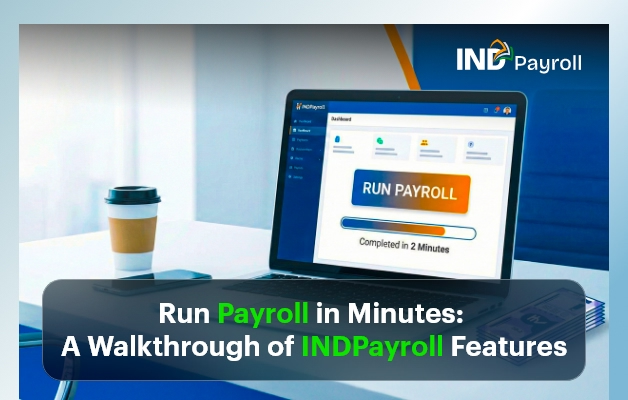
Run Payroll in Minutes: A Walkthrough of INDPayroll Features

Payroll should be predictable. Yet, for many Indian SMBs, it remains one of the most time-consuming and error-prone monthly activities.

Industry research shows that a majority of payroll discrepancies originate from manual calculations, spreadsheet dependency, and disconnected HR systems — leading to penalties, rework, and employee dissatisfaction.

In 2025, compliance complexity is rising while teams are expected to do more with fewer resources. Therefore, businesses need tools that run payroll in minutes, not days. This is no longer a convenience; it is a competitive necessity.

In this walkthrough, you will learn how to run payroll in minutes using INDPayroll — from employee setup to salary processing, statutory deductions, payslips, and reporting. We will also cover best practices, common mistakes, and a real-world success example to help you move from manual chaos to automated clarity.

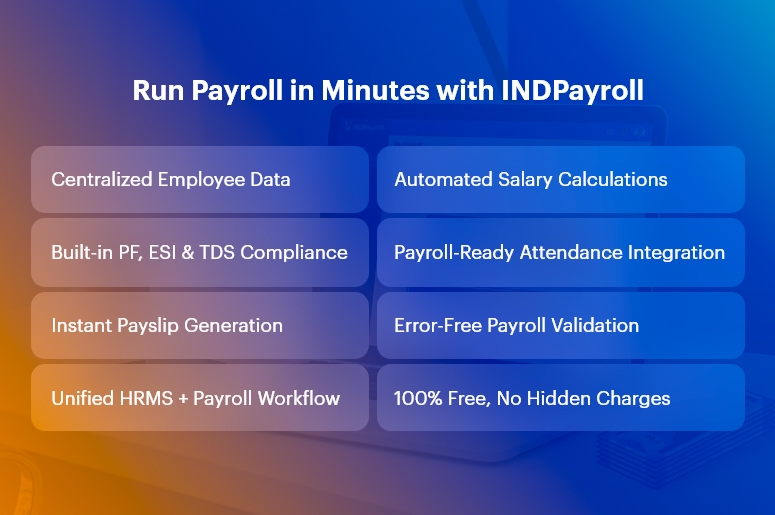
Run Payroll in Minutes with INDPayroll

Business Need & Importance

As businesses scale, payroll complexity increases exponentially. Headcount grows, pay structures diversify, and compliance obligations multiply. Consequently, spreadsheet-driven payroll cannot keep up.

Why this is a board-level concern today:

  • Operational inefficiency: Manual payroll consumes HR and finance bandwidth every month. Additionally, approvals and corrections delay salary disbursement.
  • Compliance risk: Errors in PF, ESI, TDS, and statutory filings expose businesses to penalties and audits.
  • Employee trust erosion: Late or inaccurate payslips reduce morale and increase attrition.
  • Cost leakage: Rework, penalties, and external consultants add hidden costs.

Industry examples:

  • Manufacturing: Shift allowances, overtime, and contract labor make payroll calculations complex and error-prone.
  • Retail & Distribution: High attrition and variable incentives require frequent payroll updates.
  • Services & IT: Multiple pay components and compliance across locations demand automation.

Therefore, to run payroll in minutes, businesses must adopt digitized, integrated, and compliant payroll software that connects HR data, attendance, and finance — without manual intervention.

Step-by-Step Framework to Run Payroll in Minutes

Centralize employee data first

A single source of truth is essential. Store employee profiles, salary structures, bank details, and statutory IDs in one system. This eliminates duplication and ensures accuracy during processing.

Automate statutory calculations

Manual computation of PF, ESI, and TDS is risky. Automation ensures real-time accuracy aligned with current regulations, reducing compliance exposure.

Use payroll-ready attendance inputs

Integrate attendance, leaves, and holidays directly with payroll. Consequently, salary calculations reflect actual working days without manual adjustments.

Generate payslips and reports instantly

Automated payslips and statutory reports reduce processing time from hours to minutes while improving transparency.

Free Payroll, PF, ESI & TDS Software

The most trusted automation tool for modern Indian businesses.
Best Practices

  • Standardize salary components: Clearly define earnings, deductions, and reimbursements. This prevents last-minute changes and ensures consistent calculations every cycle.
  • Lock payroll periods: Freeze data before processing to avoid accidental edits. As a result, approvals become faster and more controlled.
  • Audit before release: Run pre-payroll checks to validate totals, deductions, and net pay. This minimizes post-processing corrections.

Do’s and Don’ts

Do:

  • Automate recurring payroll tasks to save time every month.
  • Maintain compliance dashboards for PF, ESI, and TDS visibility.
  • Train HR teams on system workflows to maximize adoption.

Don’t:

  • Rely on spreadsheets as your primary payroll system.
  • Delay compliance filings, which can attract penalties.
  • Ignore payroll analytics, which provide cost and workforce insights.

Why INDPayroll Delivers an End-to-End Advantage

INDPayroll is designed to run payroll in minutes by connecting critical business modules:

  • HRMS: Centralized employee and policy management.
  • Payroll: Automated salary, deductions, payslips, and filings.
  • Attendance & Leave: Real-time inputs for accurate payroll.
  • Finance & Reporting: Salary cost visibility and compliance tracking.

Because everything operates within one ecosystem, businesses eliminate manual handoffs and accelerate payroll cycles.

Customer Success

For example, a mid-sized manufacturing company implemented automated payroll processing using INDPayroll to solve recurring salary delays and compliance errors. Within two payroll cycles, they reduced processing time by 70%, eliminated manual PF and ESI calculations, and achieved 100% on-time payslip distribution.

Moreover, HR teams reclaimed nearly 12 hours per month, which they redirected toward workforce planning and engagement initiatives. This transformation allowed Aarav Textiles to run payroll in minutes, even during peak production months.

India’s #1 Free Software

Free Payroll, PF, ESI & TDS Software

Key Takeaways & Closing

Payroll efficiency directly impacts compliance, employee satisfaction, and operational agility. As regulations grow complex, businesses can no longer afford manual processes.

By adopting automation, standardization, and integrated workflows, organizations can run payroll in minutes with confidence.

INDPayroll empowers teams to move faster, reduce risk, and scale without adding administrative overhead. The future of payroll is not just digital — it is instant, accurate, and stress-free.

FAQs

1. Can small businesses really run payroll in minutes?

Yes. With automated calculations and centralized data, SMBs can run payroll in minutes without manual spreadsheets.

2. Is INDPayroll suitable for Indian compliance?

Absolutely. INDPayroll supports PF, ESI, TDS, and statutory reporting, ensuring compliance-ready payroll.

3. Does free payroll software compromise features?

No. INDPayroll offers full payroll functionality, allowing businesses to run payroll in minutes without hidden costs.

4. How long does implementation take?

Most teams complete setup within a few hours and process their first payroll the same day.

5. Can payroll integrate with HR and attendance?

Yes. INDPayroll integrates HRMS and attendance to ensure accurate salary calculations.

6. Is payroll data secure?

INDPayroll uses secure infrastructure and role-based access to protect sensitive payroll information.

India’s #1 Free Software

Free Payroll, PF,
ESI & TDS Software

Professional compliance management for Indian businesses. 100% Free Forever.

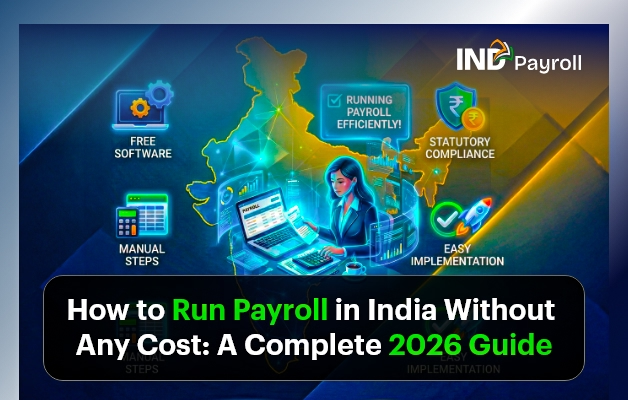
How to Run Payroll in India Without Any Cost: A Complete 2026 Guide

Payroll should be simple. Yet for many Indian businesses, it remains one of the most stressful, error-prone, and expensive monthly operations.

In fact, a large percentage of payroll errors in India originate from manual calculations, outdated spreadsheets, or disconnected systems — leading to penalties, employee dissatisfaction, and compliance risks.

As we move into 2026, businesses face increasing regulatory complexity, rising operational costs, and growing employee expectations.
At the same time, small and mid-sized businesses are under pressure to operate leaner, faster, and smarter.

This raises a critical question: Is it really possible to run payroll in India without any cost — and still stay compliant?

The answer is yes.

In this comprehensive guide, you will learn exactly how to run payroll in India without any cost, using modern automation, free payroll platforms, and best practices trusted by growing businesses.

More importantly, you will understand how solutions like INDPayroll help businesses eliminate payroll expenses while improving accuracy, compliance, and operational efficiency.

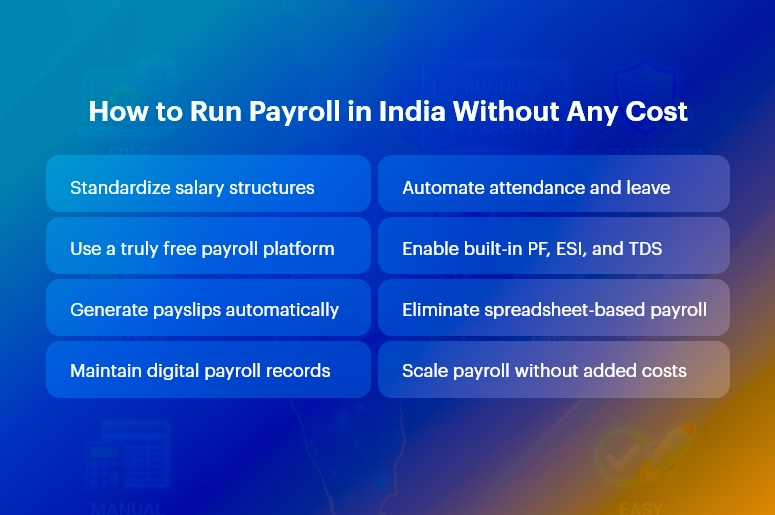
How to Run Payroll in India Without Any Cost

Why Running Payroll Without Cost Matters More Than Ever

In today’s business environment, payroll is no longer just an HR task. It directly impacts cash flow, compliance, employee trust, and leadership credibility.

Rising Payroll Challenges Across Industries

Manufacturing companies often struggle with shift-based attendance, overtime calculations, and statutory compliance. Retail and distribution businesses face high employee turnover, variable pay structures, and frequent onboarding. Meanwhile, service-based companies and startups deal with multi-location teams, contractors, and tight budgets.

Across industries, businesses face common payroll challenges:

  • Manual payroll processing increases errors and rework

When payroll depends on spreadsheets and manual formulas, even a small change in attendance, tax rules, or salary structure can create cascading errors. These mistakes consume hours of correction time and increase compliance risk.

  • High payroll software costs strain growing businesses

Many payroll tools charge per employee or per month, making them expensive as teams scale. For SMBs and startups, these recurring costs quickly add up without delivering proportional value.

  • Disconnected systems reduce visibility and control

Payroll systems that do not integrate with attendance, HR, finance, or compliance workflows create data silos. As a result, teams spend more time reconciling data than making informed decisions.

Why Spreadsheets Are No Longer Enough

Spreadsheets may appear “free” but they carry hidden costs — manual effort, compliance risk, delayed processing, and employee dissatisfaction. In 2025, growing businesses need automated, connected, and compliant payroll systems that scale without increasing cost.

This is precisely why more businesses are choosing to run payroll in India without any cost using modern platforms like INDPayroll, instead of outdated tools.

India’s #1 Free Software

Free Payroll, PF,
ESI & TDS Software

Professional compliance management for Indian businesses. 100% Free Forever.

Best Practices, Frameworks & Actionable Tips to Run Payroll in India Without Any Cost

Running payroll for free is not about cutting corners. It is about working smarter, not harder. Below is a proven framework followed by successful Indian businesses.

Step 1: Standardize Your Payroll Structure

A clear payroll structure is the foundation of cost-free payroll.

  • Define salary components clearly and consistently: Break salaries into basic pay, allowances, deductions, and statutory contributions. A standardized structure reduces manual adjustments and simplifies automation across teams.
  • Align salary components with statutory rules: PF, ESI, and TDS calculations depend on correct component mapping. When aligned properly, automation tools like INDPayroll calculate deductions accurately without manual intervention.

Step 2: Automate Attendance and Leave Tracking

Payroll errors often originate from inaccurate attendance data.

  • Centralize attendance and leave data: Use a system that automatically feeds attendance, overtime, and leave data into payroll. This eliminates duplicate data entry and reduces payroll delays.
  • Avoid manual attendance reconciliation: Manual attendance tracking creates inconsistencies that affect salary accuracy. Automation ensures payroll always reflects real working hours.

INDPayroll integrates attendance and payroll seamlessly, ensuring accurate salary processing at zero cost.

Step 3: Use a Truly Free Payroll Platform

Not all “free” payroll tools are truly free.

  • Choose a platform with no hidden fees: Many tools advertise free trials but later charge for essentials like payslips or compliance reports. INDPayroll offers 100% free payroll processing without usage caps.
  • Ensure statutory compliance is built-in: A free payroll system must support PF, ESI, TDS, and payslip generation automatically. This eliminates dependency on external consultants.

Step 4: Follow Payroll Do’s and Don’ts

Do’s

  • Automate calculations wherever possible to eliminate errors and save time.
  • Review payroll summaries before finalization to catch anomalies early.
  • Maintain digital records for audits and statutory filings.

Don’ts

  • Do not rely on manual spreadsheets as your primary payroll system.
  • Do not delay payroll processing, as it impacts employee trust.
  • Do not ignore compliance updates, which can lead to penalties.

Step 5: Leverage INDPayroll as an End-to-End Solution

INDPayroll goes beyond payroll. It connects HRMS, Payroll, Finance, Projects, Manufacturing, Inventory, and CRM into a unified platform. This ensures payroll data flows seamlessly across departments, enabling smarter decisions and operational efficiency — without increasing cost.

Customer Success

For example, Sharma Precision Components, a mid-sized manufacturing business, struggled with payroll errors, overtime disputes, and high payroll software costs. They implemented automated payroll and attendance management using INDPayroll to address these challenges.

Within 60 days, they achieved:

  • 70% reduction in payroll processing time
  • 100% accuracy in PF and ESI calculations
  • Zero payroll software expenses
  • Faster salary closures and improved employee satisfaction

By switching to INDPayroll, Sharma Precision transformed payroll from a monthly headache into a streamlined, cost-free operation that supported business growth.

India’s #1 Free Software

Free Payroll, PF, ESI & TDS Software

Key Takeaways & Closing

Running payroll does not have to be expensive, complex, or stressful. With the right approach, businesses can run payroll in India without any cost while maintaining accuracy, compliance, and employee trust.

By standardizing payroll structures, automating attendance, and using a free, integrated platform like INDPayroll, businesses eliminate hidden costs and future-proof their operations. As regulations evolve and teams grow, automation becomes not just an advantage — but a necessity.

The future of payroll is connected, compliant, and cost-free.

FAQs

1. Is it really possible to run payroll in India without any cost?

Yes, businesses can run payroll in India without any cost by using free payroll platforms like INDPayroll that automate salary, compliance, and payslips without subscription fees.

2. Are free payroll systems compliant with Indian laws?

A reliable free payroll system includes built-in compliance for PF, ESI, TDS, and payslips. INDPayroll ensures statutory compliance while remaining cost-free.

3. Can small businesses trust free payroll software?

Yes, many SMBs successfully use free payroll tools. The key is choosing a platform with automation, security, and compliance, such as INDPayroll.

4. Does free payroll software support growing teams?

Modern free payroll platforms are designed to scale. INDPayroll supports growing teams without increasing payroll costs.

5. What are the risks of using spreadsheets for payroll?

Spreadsheets increase error risk, consume time, and lack compliance automation. Businesses aiming to run payroll in India without any cost should avoid spreadsheets.

6. How long does it take to implement INDPayroll?

Most businesses can set up and run payroll using INDPayroll within a few hours, making it a fast and cost-free transition.

7. Can INDPayroll integrate with other business systems?

Yes, INDPayroll integrates payroll with HRMS, finance, projects, manufacturing, inventory, and CRM for end-to-end operational visibility.

Free Payroll, PF, ESI & TDS Software

The most trusted automation tool for modern Indian businesses.
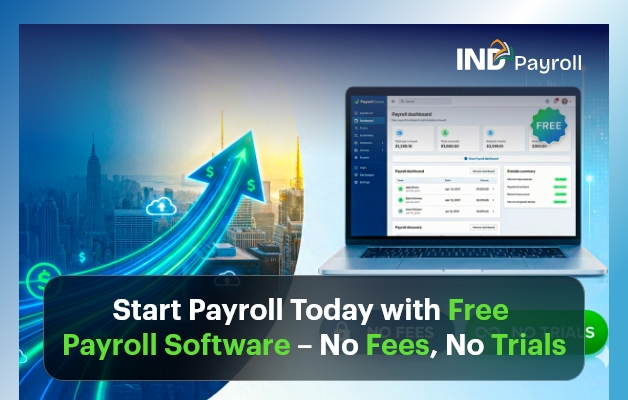
Start Payroll Today with Free Payroll Software – No Fees, No Trials

In 2025, more than 70% of small and mid-sized businesses still struggle with payroll accuracy, compliance, and month-end delays, despite having access to modern technology. For many organizations, payroll remains a stressful, error-prone process driven by spreadsheets, manual calculations, and disconnected tools. A single mistake can lead to penalties, employee dissatisfaction, and lost trust.

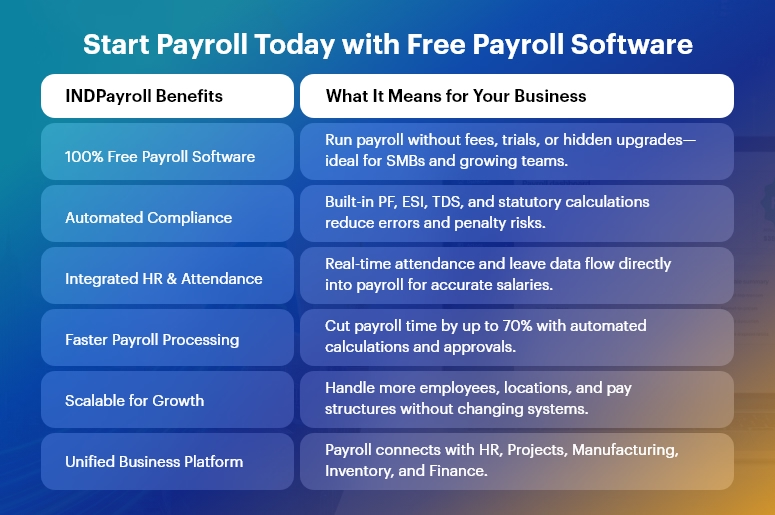
This is exactly why free payroll software has become a strategic necessity—not just a cost-saving option. Businesses today need systems that are accurate, compliant, automated, and scalable without adding financial burden.

Moreover, payroll no longer exists in isolation. It touches HR, finance, compliance, attendance, projects, manufacturing output, and even sales incentives. When these systems don’t talk to each other, operational inefficiencies multiply.

In this blog, you will learn why free payroll software matters in 2026, how to implement it the right way, and how INDPayroll helps businesses automate payroll end-to-end—without fees, trials, or hidden limits. Whether you manage operations, HR, finance, or delivery teams, this guide will help you make smarter payroll decisions.

Start Payroll Today with Free Payroll Software

Business Need & Importance

Payroll has evolved from a back-office function into a business-critical operational pillar. Today’s organizations operate in a complex environment shaped by frequent regulatory changes, distributed workforces, variable pay structures, and rising employee expectations.

However, many growing businesses still rely on Excel sheets, email approvals, and manual calculations. As a result, they face compliance risks, delayed salaries, inaccurate deductions, and poor audit readiness. Over time, these issues directly impact productivity, retention, and brand credibility.

In manufacturing, payroll accuracy is tied to shifts, overtime, and production-linked incentives. Even small miscalculations can distort labor costs and profitability.

In retail and distribution, businesses manage variable attendance, seasonal hiring, and location-based compliance, which spreadsheets simply cannot scale.

In services and IT-enabled industries, payroll connects deeply with project hours, billable utilization, and statutory reporting.

Moreover, manual payroll processes consume valuable time. HR and finance teams spend days reconciling data instead of focusing on workforce planning and strategic analysis. This inefficiency becomes unsustainable as organizations grow beyond 20–30 employees.

Therefore, free payroll software is no longer about saving money alone. It is about reducing operational risk, improving compliance confidence, enabling scalability, and creating connected workflows across HR, finance, projects, and manufacturing operations. Businesses that modernize payroll early gain a measurable competitive advantage.

India’s #1 Free Software

Free Payroll, PF, ESI & TDS Software

Best Practices, Frameworks & Actionable Tips

Step 1: Centralize Employee Data Across Functions

A foundational best practice is maintaining a single source of truth for employee data. Payroll errors often originate from inconsistent or outdated records across HR, attendance, and finance systems.

With INDPayroll, employee data flows seamlessly across HRMS, Payroll, Attendance, Projects, and Manufacturing modules, ensuring every salary calculation reflects real-time inputs.

Step 2: Automate Statutory Compliance by Default

In 2025, compliance cannot be optional or manual. Businesses must automate PF, ESI, TDS, professional tax, and payslip generation.

Free payroll software from INDPayroll embeds compliance logic into the system, reducing dependency on manual checks while ensuring audit readiness.

Step 3: Integrate Payroll with Attendance and Overtime

Payroll accuracy depends on accurate time data. However, many organizations still reconcile attendance manually at month-end.

INDPayroll integrates daily attendance, shift hours, and overtime calculations directly into payroll, eliminating rework and reducing payroll processing time significantly.

Step 4: Align Payroll with Projects and Production

Payroll becomes more complex when linked to projects, contracts, or production output.

INDPayroll connects Projects, Manufacturing, and Payroll, enabling accurate wage allocation, incentive calculation, and cost tracking — without spreadsheets.

Step 5: Use Mini Checklists for Monthly Payroll Runs

Even automated systems need structured processes. A simple checklist ensures consistency:

  • Validate attendance and leave data before payroll closure
  • Review statutory deductions and exemptions
  • Generate payslips and compliance reports
  • Lock payroll data for audit integrity

INDPayroll supports these workflows with built-in approvals and reporting dashboards.

Common Mistakes to Avoid

  • Relying on Excel for growing teams beyond 20 employees
  • Managing payroll separately from HR and finance
  • Ignoring real-time compliance updates
  • Choosing tools with hidden costs after trials

Why INDPayroll Is a Superior End-to-End Solution

Unlike fragmented tools, INDPayroll unifies CRM, HRMS, Payroll, Projects, Manufacturing, Inventory, and Finance on one platform. This connected approach ensures payroll accuracy reflects actual business operations — not assumptions.

Additionally, INDPayroll’s free payroll software model removes cost barriers, allowing businesses to modernize without financial risk.

Customer Success Example

For example, Sharma Engineering Works, a mid-sized manufacturing business, implemented Payroll and Attendance Automation using INDPayroll to solve recurring salary errors and overtime disputes.

Previously, payroll processing took 4–5 days each month, with frequent corrections after salary disbursement.

Within 60 days, the company achieved 98% payroll accuracy, reduced payroll processing time by 70%, and eliminated manual reconciliation between attendance, production shifts, and finance records.

Overtime calculations became transparent, and compliance filings were generated automatically.

Here’s how it transformed their operations: HR teams gained confidence in payroll runs, finance teams accessed real-time labor cost reports, and employees received accurate, on-time salaries with detailed payslips.

Most importantly, leadership gained visibility into workforce costs linked directly to production output—enabling smarter operational decisions.

India’s #1 Free Software

Free Payroll, PF,
ESI & TDS Software

Professional compliance management for Indian businesses. 100% Free Forever.

Key Takeaways & Closing

Payroll in 2025 demands more than calculations — it requires accuracy, compliance, speed, and integration. Businesses that continue relying on manual processes expose themselves to avoidable risks and inefficiencies.

By adopting free payroll software, organizations can modernize operations without increasing costs. INDPayroll enables this transformation by connecting payroll with HR, projects, manufacturing, inventory, and finance — creating a truly unified operational ecosystem.

As regulatory complexity increases and workforces become more dynamic, the need for reliable, automated payroll will only grow. Businesses that act now will not only reduce risk but also build scalable, future-ready operations.

With free payroll software from INDPayroll, payroll becomes a strategic advantage—not a monthly headache.

FAQs

1. What makes INDPayroll different from other free payroll software?

INDPayroll offers truly free payroll software with no usage limits, no trials, and no hidden upgrades, while integrating HR, finance, and operations in one system.

2. Is free payroll software reliable for compliance in India?

Yes. INDPayroll automates PF, ESI, TDS, and statutory reporting, making free payroll software both accurate and compliance-ready.

3. Can growing businesses scale using free payroll software?

Absolutely. INDPayroll is designed for scalability, supporting growing teams, multiple locations, and complex payroll structures.

4. Does free payroll software integrate with attendance and HR?

INDPayroll seamlessly integrates payroll with attendance, HRMS, projects, and manufacturing, ensuring real-time accuracy.

5. Is data secure in INDPayroll’s free payroll software?

Yes. INDPayroll follows enterprise-grade security practices, ensuring payroll and employee data remain protected.

6. How long does it take to implement INDPayroll?

Most businesses can configure and start payroll within days, thanks to intuitive workflows and guided setup.

Free Payroll, PF, ESI & TDS Software

The most trusted automation tool for modern Indian businesses.
Category: EPFO & ESI

No posts in this category.

Subcategory: EPFO

Subcategory: ESI

Category: Payroll Help

No posts in this category.

Subcategory: Employee Self-Service & Engagement

Subcategory: Introduction to Payroll

Subcategory: Payroll Analytics & Reporting

Subcategory: Payroll Automation & Technology

Subcategory: Payroll for Business Growth

Subcategory: Payroll Processing & Management

Subcategory: Taxation & Compliance

Category: User Manual

No posts in this category.

Subcategory: Company Setup

Subcategory: Employee Management

Subcategory: Getting Started

Subcategory: Glossary

Subcategory: Import & Export

Subcategory: Introduction

Subcategory: Payroll Configuration

Subcategory: Payslips & Disbursement

Subcategory: Reports & Analytics

Subcategory: Running Payroll

Subcategory: Statutory Compliance & Reports

Subcategory: Troubleshooting

Subcategory: User Management & Security