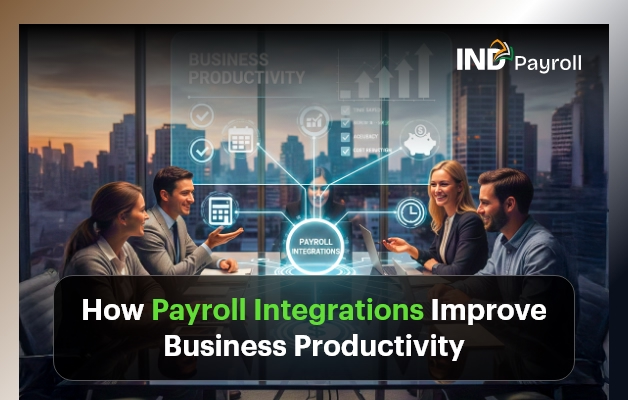
How Payroll Integrations Improve Business Productivity?

If you want to grow faster, scale smarter, and reduce errors across your organization, then understanding how payroll integrations improve business productivity is essential.

In this comprehensive guide, we explain everything from what payroll integrations are to how they deliver tangible results for businesses of all sizes.

Moreover, we provide actionable tips, transition-rich insights, and best practices so you don’t need to look elsewhere.
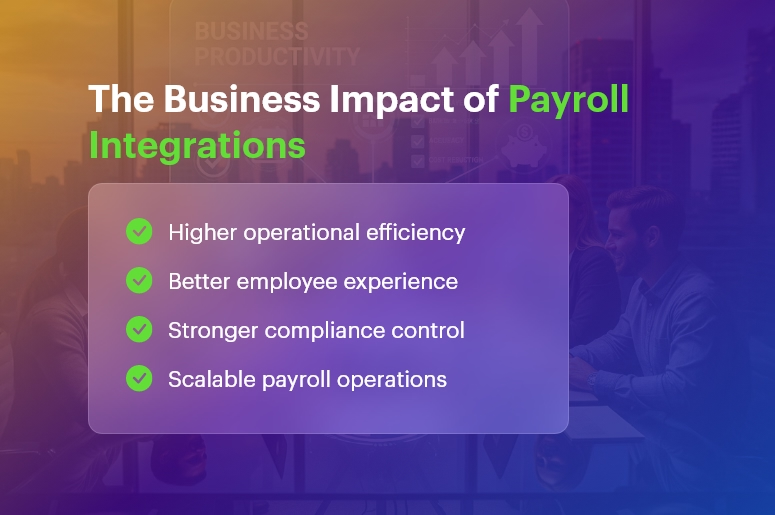
The Business Impact of Payroll Integrations

What Are Payroll Integrations?

At the core, this integrations connect your payroll system with other business software such as human resources (HR), time tracking, accounting, and benefits management.

When payroll systems exchange data automatically, you say goodbye to manual entry, reconciliation errors, and wasted time.

In fact, one of the most compelling reasons businesses adopt integrations is to boost efficiency.

Most business leaders ask, “How exactly do integrations improve business productivity?” The answer lies in automation, accuracy, and seamless workflows.

Why Payroll Integrations Matter

For years, companies relied on manual processes. Yet manual work consumes hours, introduces errors, and frustrates employees. Fortunately, the integrations solve these challenges by enabling automatic data flow between systems.

To explain clearly:

  • Time and Attendance Systems connect to payroll so that hours worked flow instantly into pay calculations. Therefore, teams don’t re-enter timesheets.
  • HR Platforms sync employee data so that changes in status, pay grade, or benefits automatically update in payroll.
  • Accounting Software receives payroll data for financial reporting without manual export or import.

When you integrate systems this way, payroll integrations improve business productivity by eliminating redundant tasks and accelerating workflows.

Top Benefits of Payroll Integrations

Now that we understand what this integrations are, let’s explore the real value they provide.

1. Eliminate Manual Data Entry

One of the most obvious ways payroll integrations improve business productivity is by removing manual data transfer. Instead of copying hours, pay rates, and deductions across systems, integrations handle it automatically.

Thus, HR and payroll staff save countless hours every pay cycle.

2. Reduce Errors and Compliance Risks

Human error is costly. Even a misplaced digit can result in underpaying an employee or triggering compliance violations.

Consequently, businesses that leverage payroll integrations see fewer mistakes. Because the systems speak directly to each other, accuracy increases and compliance risk decreases. Therefore, these integrations improve business productivity by protecting your organization and preserving employee trust.

3. Speed Up Payroll Processing

Time saved on manual tasks translates directly into speed. When systems exchange data without friction, payroll can process more quickly and with confidence.

Accordingly, your finance team can close books faster, and your HR team can focus on strategic initiatives rather than data cleanup. This is yet another way payroll integrations improve business productivity.

4. Improve Visibility and Reporting

With integrated systems, data isn’t trapped in silos. Instead, leaders access real-time insights across payroll, HR, and finance.

Therefore, you can generate meaningful reports instantly without waiting for manual consolidation. As a result, payroll integrations improve business productivity by enabling smarter decision-making.

5. Enhance Employee Experience

Employees expect fast and accurate pay. When payroll integrates with leave management, time tracking, and benefits systems, employees benefit from a smooth experience with fewer pay issues.

Naturally, this increases engagement and reduces HR support inquiries — further evidence that the integrations improve business productivity.

India’s #1 Free Software

Free Payroll, PF, ESI & TDS Software

Related Systems That Benefit from Payroll Integrations

“Payroll doesn’t operate in isolation,” you might think. That’s correct. A modern technology ecosystem requires integrations across multiple platforms.

Below are the key systems that tie into payroll and amplify productivity:

HR Information Systems (HRIS)

An HRIS houses employee records, job roles, benefits, and performance data. When payroll syncs seamlessly with HRIS:

  • New hire data flows instantly
  • Pay rate changes update automatically
  • Terminations close out correctly

Thus, integrations improve business productivity by avoiding duplicated updates.

Time & Attendance Platforms

These tools track worked hours, overtime, and leave. When they integrate with payroll:

  • Time records flow automatically into pay runs
  • PTO balances update accurately
  • Compliance with labor laws improves

Clearly, this connection drives productivity by reducing reconciliation work and ensuring accuracy.

Benefits Administration Systems

Benefits information such as insurance, retirement contributions, and deductions must feed into payroll accurately.

Because benefits systems integrate with payroll, changes in coverage update without manual entry — another proof point of how payroll integrations improve business productivity.

Accounting and Financial Software

Payroll generates expenses, taxes, and liabilities that must appear in accounting. Integrations ensure that payroll data appears where it should in your financial records.

Consequently, integrations improve business productivity by eliminating dual entry and accelerating month-end close.

How Payroll Integrations Improve Business Productivity: Real-Life Examples

To make this more concrete, here are practical examples of how businesses benefit.

Example 1: Faster Onboarding

Before integration, HR staff manually entered every new employee into payroll. Now, onboarding in the HR system automatically creates a payroll record. Therefore, staff save hours weekly and avoid errors.

This direct automation is how integrations improve business productivity—fewer touches, less time, superior accuracy.

Example 2: Automated Time Tracking to Payroll

A manufacturing company integrated its time clocks with payroll. Consequently, they eliminated hundreds of hours of weekly data entry. Errors dropped significantly, compliance improved, and payroll closed rapidly each pay period.

This concrete outcome once again shows how payroll integrations improve business productivity.

Free Payroll, PF, ESI & TDS Software

The most trusted automation tool for modern Indian businesses.

Implementation Guide: How to Integrate Payroll Successfully

So far, you know the benefits and systems involved. Next, here’s how to implement integrations effectively.

1. Define Objectives Clearly

Start by defining what you want to achieve. For example:

  • Do you want to eliminate manual entry?
  • Do you need more accurate reporting?
  • Do you want automatic benefits reconciliation?

When you articulate these goals, you understand how payroll integrations improve business productivity for your organization.

2. Select Compatible Software

Not all systems integrate easily. Therefore, choose payroll, HR, and related software that support open APIs or pre-built connectors. If you select compatible systems from the start, integration will be smoother and more effective.

This decision directly impacts how integrations improve business productivity.

3. Map Your Data Flows

Next, document what fields need to flow between systems — for example, employee IDs, hours worked, benefits codes, tax details, and pay rates.

When you map these flows upfront, you reduce confusion and minimize implementation delays. This preparation reinforces how payroll integrations improve business productivity.

4. Plan for Testing

Before going live, test thoroughly. Confirm that data moves correctly, calculations remain intact, and exceptions trigger alerts. Without testing, you risk broken processes, which defeats the purpose of integrations.

Thorough testing is crucial to show how integrations improve business productivity in practice.

5. Train Users

Even the best systems fail without user adoption. Train HR, payroll, and finance teams to understand the integration and how it changes their process.

Proper training ensures teams embrace changes and realize how payroll integrations improve business productivity.

Common Challenges and How to Overcome Them

Despite the clear benefits, some businesses encounter obstacles.

Data Quality Issues

If source data is inconsistent, integrations yield poor results. To mitigate this:

  • Clean existing data
  • Standardize formats
  • Use validation rules

This improves accuracy and reinforces how integrations improve business productivity.

Integration Costs

Initial costs can concern some organizations. However, you must consider the long-term ROI. Automation saves time and reduces errors. When you calculate total savings, you see how payroll integrations improve business productivity outweighs upfront investment.

Change Management

Integrations can disrupt workflows. Therefore, communicate early, involve stakeholders, and support employees in the transition. With the right approach, teams will adopt new processes and appreciate how integrations improve business productivity.

Best Practices for Payroll Integration Success

To derive maximum benefit, adopt these best practices:

Use Standardized Data Formats

Standardization prevents mismatches and improves consistency. This step ensures your integration functions as expected and reinforces how payroll integrations improve business productivity.

Monitor Integrations Continually

Set up automated monitoring and alerts so that if a data sync fails, your team knows immediately. This proactive stance preserves productivity — a key way integrations improve business productivity.

Document Everything

Documentation ensures clarity. When team members understand integration logic and dependencies, they can troubleshoot issues fast. This clarity supports how payroll integrations improve business productivity in daily operations.

Future Trends: Payroll Integrations and AI

Emerging technologies like artificial intelligence and machine learning are reshaping payroll. For instance:

  • AI can predict anomalies before payroll runs
  • Intelligent bots can recommend corrections
  • Systems can learn patterns and suggest process improvements

These innovations will amplify how integrations improve business productivity even further in the years ahead.

Conclusion

Now you understand the complete landscape of how payroll integrations improve business productivity. You have seen:

  • What integrations are
  • Why they matter
  • The systems that benefit
  • Real examples
  • Implementation steps
  • Challenges and best practices
  • Future trends

By adopting integrations, you eliminate manual work, reduce errors, accelerate processes, and empower your teams.

Consequently, integrations improve business productivity in every part of your organization.

If you implement these strategies thoughtfully, you’ll increase efficiency, elevate compliance, and strengthen employee satisfaction — all without needing to consult another guide.

India’s #1 Free Software

Free Payroll, PF,
ESI & TDS Software

Professional compliance management for Indian businesses. 100% Free Forever.

Frequently Asked Questions (FAQ)

1. What are payroll integrations?

Payroll integrations connect payroll software with HR, time tracking, accounting, and benefits systems so data flows automatically without manual entry.

2. How do payroll integrations improve business productivity?

integrations improve business productivity by eliminating repetitive data entry, reducing errors, speeding up payroll cycles, and enabling teams to focus on strategic work instead of administrative tasks.

3. Which systems are most commonly integrated with payroll?

Payroll is most commonly integrated with HRIS, time and attendance systems, accounting software, and benefits administration platforms.

4. Can payroll integrations reduce payroll errors?

Yes. By automating data flow between systems, integrations significantly reduce manual mistakes that lead to incorrect pay, compliance issues, and employee dissatisfaction.

5. Are payroll integrations suitable for small businesses?

Absolutely. Small businesses benefit greatly from integrations because automation reduces workload, improves accuracy, and supports scalable growth without adding headcount.

6. How long does it take to implement payroll integrations?

Implementation timelines vary. Simple integrations can take a few weeks, while complex multi-system integrations may take several months depending on data complexity and testing requirements.

7. Do payroll integrations help with compliance?

Yes. integrations improve compliance by ensuring accurate time data, correct tax calculations, and consistent employee records across systems.

8. What are the common challenges with payroll integrations?

Common challenges include poor data quality, system incompatibility, upfront integration costs, and user resistance. Proper planning and training help overcome these issues.

9. Are payroll integrations secure?

Reputable integrations use encryption, secure APIs, access controls, and compliance standards to protect sensitive payroll and employee data.

10. What is the ROI of payroll integrations?

The ROI comes from time savings, reduced errors, faster payroll processing, improved compliance, and higher employee satisfaction—all of which contribute to improved business productivity.
Generate Salary Payslips Online – Free Payslip Generator Guide

Payroll does not fail because companies do not pay salaries. It fails because companies do not document salaries correctly.

That is exactly why a payslip generator has become a core operational tool rather than an optional HR utility.

Today, payslips are not only used for employee communication. Instead, they serve as legal records, compliance documents, audit evidence, and financial proof. Therefore, any mistake in a payslip can trigger disputes, tax issues, or even legal penalties.

In this complete guide, you will learn:

  • What a payslip is and why it matters legally
  • How a generator works
  • The correct payslip format in India
  • Each salary component explained in detail
  • Common payroll mistakes and how to avoid them
  • How to automate payslip generation for your business
  • Why INDPayroll offers the most practical free generator

Let us start with the fundamentals.

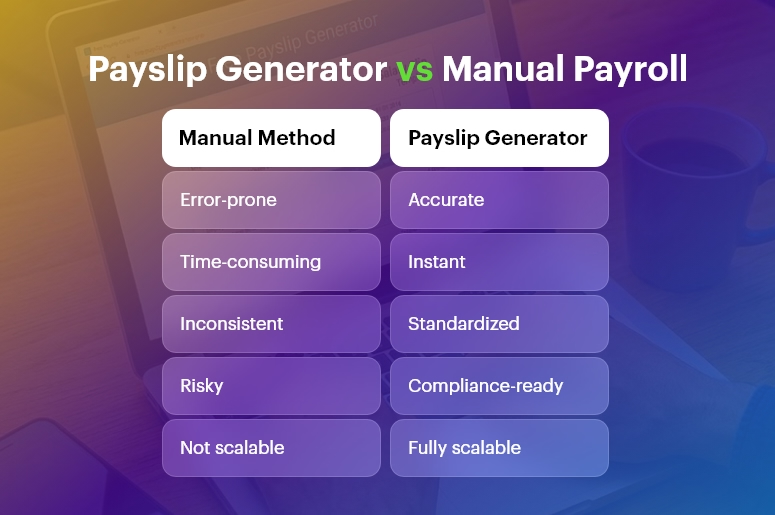
Payslip Generator vs Manual Payroll

What Is a Payslip and Why It Is Legally Important in India?

A payslip is an official salary statement issued by an employer to an employee. It shows exactly how the salary is calculated, what deductions are applied, and what amount is finally paid.

However, a payslip is far more than a salary receipt.

In India, a payslip is used for:

  • Income proof for loans, visas, and credit cards
  • tax filing and verification
  • PF and ESI reconciliation
  • Employment background checks
  • Labor audits and inspections
  • Salary dispute resolution

Therefore, when you use a payslip generator, you are not just generating a document. Instead, you are creating a compliance-grade financial record.

Why Manual Payslip Creation Is a Serious Business Risk

Many businesses still use Excel or Word to create payslips. Although this looks simple, it introduces multiple hidden risks:

As a result, companies face employee disputes, compliance notices, and operational inefficiencies.

This is precisely why a payslip app is not a convenience tool. It is a risk management tool.

Free Payroll, PF, ESI & TDS Software

The most trusted automation tool for modern Indian businesses.

What Is a Payslip Generator?

A payslip generator is an online system that automatically:

  • Calculates salary components
  • Applies statutory deductions
  • Structures payslip format
  • Generates professional payslips
  • Produces downloadable PDFs

Instead of manually working with formulas and formats, you simply input the salary details and let the payslip generator handle the rest.

Key Benefits of Using a Payslip Generator

When businesses shift to a payslip generator, they immediately gain:

  • Faster payroll processing
  • Zero calculation errors
  • Consistent salary structure
  • Built-in compliance readiness
  • Better employee trust
  • Lower HR workload

In addition, a payslip app makes payroll scalable without increasing administrative cost.

India’s #1 Free Software

Free Payroll, PF, ESI & TDS Software

Standard Payslip Format in India (Fully Explained)

Every compliant Indian payslip contains four core sections.

1. Employee & Employer Details

This section establishes the identity and legal ownership of the salary record.

Employee Details include:

  • First get Employee name and ID for unique identification
  • Designation and department for role-based classification
  • PAN for income tax reporting and TDS reconciliation
  • UAN for PF tracking and statutory linkage

Employer Details include:

  • Company name and address for legal validity
  • Pay period (month and year) for accounting relevance

A professional payslip generator auto-populates and standardizes this information to avoid inconsistencies.

2. Earnings Section (How Salary Is Built)

This section shows exactly how the salary is structured.

Common components include:

  • Basic Salary: This is the foundation of the salary structure. PF, gratuity, and bonus calculations usually depend on it.
  • House Rent Allowance (HRA): This component enables tax exemptions for employees who live in rented houses.
  • Special Allowance: This is a balancing component used to adjust CTC structures without disturbing statutory ratios.
  • Conveyance or Other Allowances: These may include transport, medical, communication, or location-based allowances.

A modern payslip generator ensures that:

  • Every component is listed
  • Totals are calculated correctly
  • No earnings element is missed

3. Deductions Section (Where the Money Goes)

This section is the most compliance-sensitive part of the payslip.

Common deductions include:

  • Provident Fund (PF): A mandatory retirement contribution based on Basic Salary.
  • Employee State Insurance (ESI): A social security deduction for employees under the wage threshold.
  • TDS (Tax Deducted at Source): Monthly income tax deduction based on projected annual income and tax regime.
  • Professional Tax: State-level tax applicable in many regions.
  • Other Recoveries: Such as salary advances or loan deductions.

A reliable payslip app calculates, applies, and displays all deductions accurately.

4. Net Pay (Take-Home Salary)

This section clearly shows:

Net Salary = Total Earnings – Total Deductions

This is the actual amount paid to the employee.

How to Generate Payslips Online Using a Payslip Generator

Using INDPayroll’s free payslip generator is extremely simple:

  • Enter company details
  • Add employee information
  • Input salary components
  • Add deductions
  • Click generate
  • Download or share the payslip

No Excel. No formulas. No formatting issues.

Common Payslip Mistakes That Cause Payroll Disputes

Even small mistakes can cause serious problems:

A payslip app eliminates these risks through automation and standardization.

Why Payslip Accuracy Is Critical for Compliance

Payslips directly affect:

  • PF filings
  • ESI filings
  • TDS returns
  • Labor audits
  • Legal disputes

Therefore, inaccurate payslips mean compliance exposure.

A payslip generator ensures that your payroll documentation remains inspection-ready at all times.

How Small Businesses Can Automate Payslips Easily

Even a 5-employee company benefits from automation.

With a payslip generator, small businesses can:

  • Save hours every month
  • Avoid compliance errors
  • Maintain professional records
  • Scale without hiring extra staff

Who Should Use a Payslip Generator?

  • Startups
  • SMEs
  • Enterprises
  • HR teams
  • Accounting firms
  • Payroll consultants
  • Staffing agencies

If you pay salaries, you need a payslip generator.

Why Choose INDPayroll’s Free Payslip Generator?

INDPayroll’s payslip generator is built specifically for Indian payroll:

  • India-compliant salary format
  • PF, ESI, and TDS ready
  • Clean professional layout
  • Free to use
  • Instant PDF generation
  • Upgrade path to full payroll automation

Final Thoughts: Payslip Generator Is No Longer Optional

In modern businesses, payroll is not an administrative task. It is a governance function.

A payslip generator ensures:

  • Accuracy
  • Compliance
  • Trust
  • Professionalism

If you still rely on manual methods, you are taking unnecessary risk.

Start using a payslip generator today and bring structure, control, and confidence into your payroll operations.

India’s #1 Free Software

Free Payroll, PF,
ESI & TDS Software

Professional compliance management for Indian businesses. 100% Free Forever.

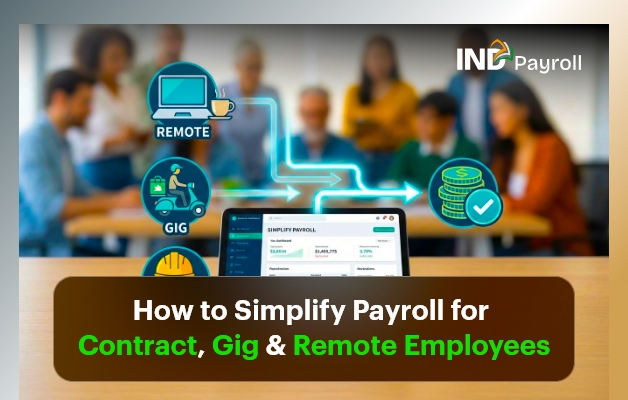
How to Simplify Payroll for Contract, Gig & Remote Employees

Payroll was never designed for today’s workforce. Contract professionals, gig workers, and remote employees now power modern businesses. However, most payroll processes still assume fixed salaries, single locations, and uniform tax rules. As a result, businesses struggle with errors, compliance gaps, delayed payments, and operational stress. This is exactly why organizations must simplify payroll.

In this comprehensive guide, you will learn how to simplify payroll for contract, gig, and remote employees using structured processes, automation, and a single purpose-built platform: INDPayroll, a 100% free payroll software designed for growing and distributed teams.

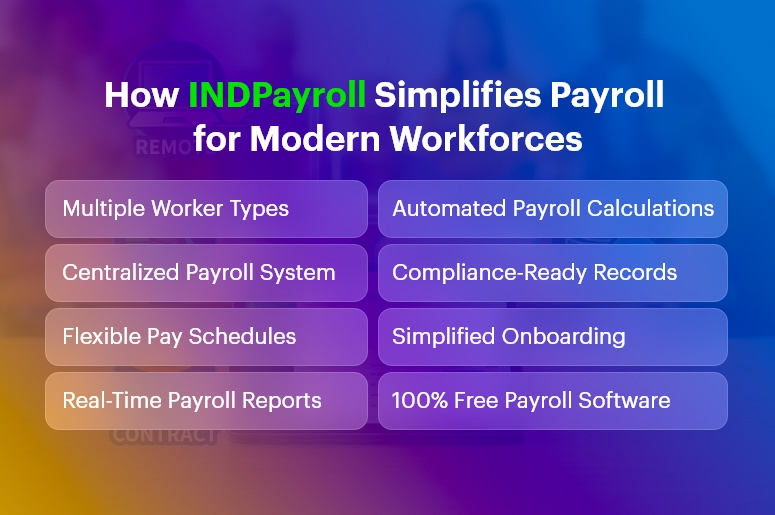
How-INDPayroll-Simplifies-Payroll-for-Modern-Workforces

Why Payroll Gets Complicated for Contract, Gig & Remote Workers

Before you can simplify payroll, you must understand why it becomes complex in the first place.

Contract, gig, and remote work introduces:

  • Multiple worker classifications
  • Variable pay structures
  • Location-based tax rules
  • Inconsistent working hours
  • Manual documentation overhead

Consequently, traditional payroll workflows break down. Teams spend more time fixing payroll issues than running payroll itself. Therefore, the first step to simplify payroll is removing manual complexity.

Step 1: Clearly Define Worker Categories

To simplify payroll, clarity comes first.

Every organization should explicitly define:

  • Contract employees – paid per agreement, responsible for their own taxes
  • Gig workers – task-based or milestone-based payments
  • Remote employees – salaried or hourly staff working from different locations

When these worker types are mixed without structure, payroll errors increase. However, when worker categories are clearly mapped inside a payroll system like INDPayroll, payroll instantly becomes easier to manage.

Step 2: Centralize Payroll in One System

Fragmented tools create fragmented payroll.

To simplify payroll, you need a single system that:

  • Manages multiple worker types
  • Automates calculations
  • Stores documentation
  • Tracks payments and compliance

INDPayroll centralizes payroll for contract, gig, and remote employees into one unified platform. More importantly, INDPayroll is 100% free, eliminating the cost barrier that prevents many businesses from upgrading their payroll processes.

By moving payroll into one system, organizations immediately simplify payroll operations and reduce dependency on spreadsheets and manual calculations.

Step 3: Automate Payroll Calculations

Manual payroll calculations are the biggest source of errors.

To truly simplify payroll, automation is non-negotiable.

INDPayroll automates:

  • Earnings calculations
  • Deductions and statutory components
  • Payment summaries
  • Payroll reports

As a result, payroll teams spend less time reconciling numbers and more time ensuring accuracy. Automation also ensures consistency, which is essential when handling contract and gig payments.

Step 4: Maintain Compliance Without Manual Effort

Compliance is where payroll usually fails.

Different employment types come with different legal obligations. If these are not tracked properly, businesses risk penalties and disputes. Therefore, to simplify payroll, compliance must be built into the system.

INDPayroll supports:

  • Structured payroll records
  • Transparent payment history
  • Audit-ready reports
  • Clear classification of worker types

By embedding compliance into everyday payroll workflows, INDPayroll removes uncertainty and helps organizations simplify payroll without relying on external tools.

Free Payroll, PF, ESI & TDS Software

The most trusted automation tool for modern Indian businesses.

Step 5: Standardize Payroll Schedules

Unclear pay schedules create confusion and distrust.

To simplify payroll, organizations should establish consistent payment cycles for each worker type:

  • Monthly or biweekly payroll for remote employees
  • Agreed invoice-based cycles for contractors
  • Regular payout intervals for gig workers

INDPayroll allows businesses to manage these schedules within a single system. Consequently, payment delays reduce, disputes decline, and payroll communication becomes predictable.

Step 6: Simplify Documentation and Onboarding

Payroll does not start with payments. It starts with onboarding.

To simplify payroll, documentation must be standardized:

  • Contracts
  • Tax declarations
  • Payment terms
  • Bank details

INDPayroll enables centralized storage and access to payroll-related data. This ensures that payroll runs smoothly from day one and prevents repeated follow-ups for missing information.

Step 7: Gain Visibility Through Payroll Reporting

Visibility simplifies decision-making.

To simplify payroll, businesses must understand:

  • Total payroll cost
  • Payments by worker type
  • Monthly and annual payroll trends

INDPayroll provides clear payroll reports that help teams monitor expenses, forecast costs, and identify discrepancies early. With real-time visibility, payroll shifts from reactive to controlled.

Common Payroll Mistakes That Prevent Simplification

Many organizations unintentionally make payroll harder than it needs to be.

Here are common mistakes that stop teams from being able to simplify payroll:

  • Relying on spreadsheets
  • Managing contractors outside payroll systems
  • Manual tax calculations
  • No centralized payroll records
  • Paying for expensive payroll software unnecessarily

INDPayroll eliminates these issues by offering a 100% free, structured, and automated payroll platform.

Why INDPayroll Is the Best Way to Simplify Payroll

When evaluating payroll solutions, simplicity, cost, and reliability matter most.

INDPayroll stands out because:

  • It is 100% free payroll software
  • It supports contract, gig, and remote employees
  • It automates payroll calculations
  • It centralizes payroll data
  • It reduces compliance risk
  • It scales with growing teams

Instead of managing payroll through fragmented tools, INDPayroll enables organizations to simplify payroll without increasing costs or complexity.

How Simplified Payroll Impacts Business Growth

Payroll efficiency directly affects growth.

When you simplify payroll:

  • HR teams save time
  • Finance teams reduce errors
  • Workers receive timely payments
  • Compliance risks decrease
  • Leadership gains cost clarity

By removing friction from payroll, businesses can focus on expansion instead of administration.

India’s #1 Free Software

Free Payroll, PF, ESI & TDS Software

Final Thoughts

Payroll complexity is not a workforce problem. It is a system problem. To simplify payroll for contract, gig, and remote employees, businesses must adopt automation, clarity, and centralized control. INDPayroll delivers all three — without cost.

If your organization wants to simplify payroll, reduce errors, and support modern workforces efficiently, INDPayroll provides the most practical and cost-effective solution available today. Simple. Compliant. Scalable. And 100% Free.

FAQs

1. How can businesses simplify payroll for contract, gig, and remote employees?

Businesses can simplify payroll by using a centralized payroll system that supports multiple worker types, automates calculations, maintains compliance records, and standardizes pay schedules. INDPayroll enables all of this in one platform.

2. What makes payroll for contract and gig workers more complex?

Contract and gig workers often have variable pay, different tax responsibilities, and flexible schedules. Without automation and structured workflows, managing these differences manually leads to errors and delays.

3. Is INDPayroll suitable for both contract and remote employees?

Yes. INDPayroll is designed to manage payroll for contract workers, gig contributors, and remote employees within a single system, making it easier to handle diverse workforce models.

4. Is INDPayroll really 100% free payroll software?

Yes. INDPayroll is a 100% free payroll software that allows businesses to manage payroll without subscription fees or hidden costs.

5. How does INDPayroll help maintain payroll compliance?

INDPayroll helps maintain compliance by organizing payroll records, supporting clear worker classification, generating audit-ready reports, and ensuring consistent payroll documentation.

6. Can INDPayroll handle different payroll schedules?

Yes. INDPayroll allows businesses to manage multiple payroll schedules, making it easy to pay remote employees, contractors, and gig workers according to agreed timelines.

7. Does INDPayroll reduce payroll errors?

Yes. By automating payroll calculations and eliminating manual data entry, INDPayroll significantly reduces errors related to payments, deductions, and reporting.

8. How does INDPayroll help HR and finance teams save time?

INDPayroll streamlines payroll workflows, centralizes employee data, and automates repetitive tasks, allowing HR and finance teams to focus on strategic activities instead of payroll administration.

9. Can growing businesses scale payroll using INDPayroll?

Yes. INDPayroll is built to scale as businesses grow, supporting increasing headcount, multiple worker types, and higher payroll volumes without additional software costs.

10. Why should businesses choose INDPayroll over manual payroll methods?

Manual payroll methods increase errors, compliance risks, and administrative workload. INDPayroll simplifies payroll management, improves accuracy, and delivers these benefits as a 100% free payroll software.

India’s #1 Free Software

Free Payroll, PF,
ESI & TDS Software

Professional compliance management for Indian businesses. 100% Free Forever.

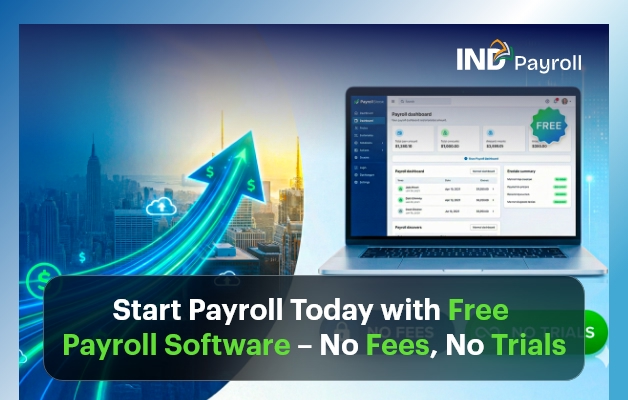
Start Payroll Today with Free Payroll Software – No Fees, No Trials

In 2025, more than 70% of small and mid-sized businesses still struggle with payroll accuracy, compliance, and month-end delays, despite having access to modern technology. For many organizations, payroll remains a stressful, error-prone process driven by spreadsheets, manual calculations, and disconnected tools. A single mistake can lead to penalties, employee dissatisfaction, and lost trust.

This is exactly why free payroll software has become a strategic necessity—not just a cost-saving option. Businesses today need systems that are accurate, compliant, automated, and scalable without adding financial burden.

Moreover, payroll no longer exists in isolation. It touches HR, finance, compliance, attendance, projects, manufacturing output, and even sales incentives. When these systems don’t talk to each other, operational inefficiencies multiply.

In this blog, you will learn why free payroll software matters in 2026, how to implement it the right way, and how INDPayroll helps businesses automate payroll end-to-end—without fees, trials, or hidden limits. Whether you manage operations, HR, finance, or delivery teams, this guide will help you make smarter payroll decisions.

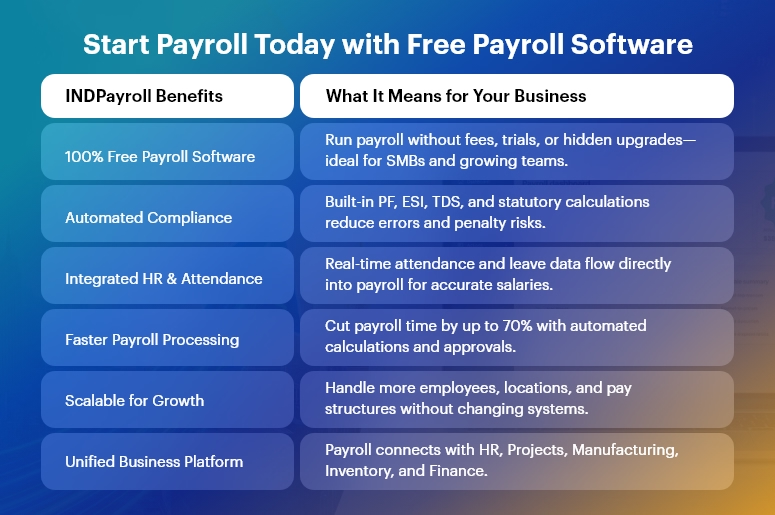
Start Payroll Today with Free Payroll Software

Business Need & Importance

Payroll has evolved from a back-office function into a business-critical operational pillar. Today’s organizations operate in a complex environment shaped by frequent regulatory changes, distributed workforces, variable pay structures, and rising employee expectations.

However, many growing businesses still rely on Excel sheets, email approvals, and manual calculations. As a result, they face compliance risks, delayed salaries, inaccurate deductions, and poor audit readiness. Over time, these issues directly impact productivity, retention, and brand credibility.

In manufacturing, payroll accuracy is tied to shifts, overtime, and production-linked incentives. Even small miscalculations can distort labor costs and profitability.

In retail and distribution, businesses manage variable attendance, seasonal hiring, and location-based compliance, which spreadsheets simply cannot scale.

In services and IT-enabled industries, payroll connects deeply with project hours, billable utilization, and statutory reporting.

Moreover, manual payroll processes consume valuable time. HR and finance teams spend days reconciling data instead of focusing on workforce planning and strategic analysis. This inefficiency becomes unsustainable as organizations grow beyond 20–30 employees.

Therefore, free payroll software is no longer about saving money alone. It is about reducing operational risk, improving compliance confidence, enabling scalability, and creating connected workflows across HR, finance, projects, and manufacturing operations. Businesses that modernize payroll early gain a measurable competitive advantage.

India’s #1 Free Software

Free Payroll, PF, ESI & TDS Software

Best Practices, Frameworks & Actionable Tips

Step 1: Centralize Employee Data Across Functions

A foundational best practice is maintaining a single source of truth for employee data. Payroll errors often originate from inconsistent or outdated records across HR, attendance, and finance systems.

With INDPayroll, employee data flows seamlessly across HRMS, Payroll, Attendance, Projects, and Manufacturing modules, ensuring every salary calculation reflects real-time inputs.

Step 2: Automate Statutory Compliance by Default

In 2025, compliance cannot be optional or manual. Businesses must automate PF, ESI, TDS, professional tax, and payslip generation.

Free payroll software from INDPayroll embeds compliance logic into the system, reducing dependency on manual checks while ensuring audit readiness.

Step 3: Integrate Payroll with Attendance and Overtime

Payroll accuracy depends on accurate time data. However, many organizations still reconcile attendance manually at month-end.

INDPayroll integrates daily attendance, shift hours, and overtime calculations directly into payroll, eliminating rework and reducing payroll processing time significantly.

Step 4: Align Payroll with Projects and Production

Payroll becomes more complex when linked to projects, contracts, or production output.

INDPayroll connects Projects, Manufacturing, and Payroll, enabling accurate wage allocation, incentive calculation, and cost tracking — without spreadsheets.

Step 5: Use Mini Checklists for Monthly Payroll Runs

Even automated systems need structured processes. A simple checklist ensures consistency:

  • Validate attendance and leave data before payroll closure
  • Review statutory deductions and exemptions
  • Generate payslips and compliance reports
  • Lock payroll data for audit integrity

INDPayroll supports these workflows with built-in approvals and reporting dashboards.

Common Mistakes to Avoid

  • Relying on Excel for growing teams beyond 20 employees
  • Managing payroll separately from HR and finance
  • Ignoring real-time compliance updates
  • Choosing tools with hidden costs after trials

Why INDPayroll Is a Superior End-to-End Solution

Unlike fragmented tools, INDPayroll unifies CRM, HRMS, Payroll, Projects, Manufacturing, Inventory, and Finance on one platform. This connected approach ensures payroll accuracy reflects actual business operations — not assumptions.

Additionally, INDPayroll’s free payroll software model removes cost barriers, allowing businesses to modernize without financial risk.

Customer Success Example

For example, Sharma Engineering Works, a mid-sized manufacturing business, implemented Payroll and Attendance Automation using INDPayroll to solve recurring salary errors and overtime disputes.

Previously, payroll processing took 4–5 days each month, with frequent corrections after salary disbursement.

Within 60 days, the company achieved 98% payroll accuracy, reduced payroll processing time by 70%, and eliminated manual reconciliation between attendance, production shifts, and finance records.

Overtime calculations became transparent, and compliance filings were generated automatically.

Here’s how it transformed their operations: HR teams gained confidence in payroll runs, finance teams accessed real-time labor cost reports, and employees received accurate, on-time salaries with detailed payslips.

Most importantly, leadership gained visibility into workforce costs linked directly to production output—enabling smarter operational decisions.

India’s #1 Free Software

Free Payroll, PF,
ESI & TDS Software

Professional compliance management for Indian businesses. 100% Free Forever.

Key Takeaways & Closing

Payroll in 2025 demands more than calculations — it requires accuracy, compliance, speed, and integration. Businesses that continue relying on manual processes expose themselves to avoidable risks and inefficiencies.

By adopting free payroll software, organizations can modernize operations without increasing costs. INDPayroll enables this transformation by connecting payroll with HR, projects, manufacturing, inventory, and finance — creating a truly unified operational ecosystem.

As regulatory complexity increases and workforces become more dynamic, the need for reliable, automated payroll will only grow. Businesses that act now will not only reduce risk but also build scalable, future-ready operations.

With free payroll software from INDPayroll, payroll becomes a strategic advantage—not a monthly headache.

FAQs

1. What makes INDPayroll different from other free payroll software?

INDPayroll offers truly free payroll software with no usage limits, no trials, and no hidden upgrades, while integrating HR, finance, and operations in one system.

2. Is free payroll software reliable for compliance in India?

Yes. INDPayroll automates PF, ESI, TDS, and statutory reporting, making free payroll software both accurate and compliance-ready.

3. Can growing businesses scale using free payroll software?

Absolutely. INDPayroll is designed for scalability, supporting growing teams, multiple locations, and complex payroll structures.

4. Does free payroll software integrate with attendance and HR?

INDPayroll seamlessly integrates payroll with attendance, HRMS, projects, and manufacturing, ensuring real-time accuracy.

5. Is data secure in INDPayroll’s free payroll software?

Yes. INDPayroll follows enterprise-grade security practices, ensuring payroll and employee data remain protected.

6. How long does it take to implement INDPayroll?

Most businesses can configure and start payroll within days, thanks to intuitive workflows and guided setup.

Free Payroll, PF, ESI & TDS Software

The most trusted automation tool for modern Indian businesses.

Top 15 Payroll Automation Benefits for SMEs in India

Payroll in India is a complex function because employers must handle salaries, variable pay, attendance, leave rules, deductions, and constantly changing statutory norms every single month. For SMEs running on smaller HR teams and tighter budgets, managing payroll manually is not just difficult — it is risky.

Indian SMEs often face:

  • Spreadsheets overloaded with data
  • Common miscalculations creating salary disputes
  • Outdated compliance knowledge causing penalties
  • Manual attendance reconciliation taking days
  • Slow and error-prone report generation for audits
  • Increased HR effort with zero strategic output

One mismanaged payroll cycle can damage employee trust and brand reputation.

This is why many SMEs in India are turning to Payroll Automation — a smarter, more secure, and highly efficient way to manage payroll. Automation uses technology to calculate salaries, apply statutory rules, process attendance, generate reports, and ensure compliance — with minimal human intervention.

Below is an in-depth, professional, and extensively detailed breakdown of how Payroll Automation transforms Indian businesses.

Why Payroll Automation Matters for Indian SMEs

Top 15 Payroll Automation Benefits for SMEs in India

Faster Salary Processing Means Happier Employees

Indian SMEs often spend 3–7 days every month preparing payroll manually. Automation cuts this time by more than 70%, because:

  • Salary structures are pre-configured
  • Attendance updates automatically
  • Deductions are applied instantly
  • No need to repeat data entry every month

Employees receive salaries on time — which directly improves morale, retention, and trust. In today’s competitive job market, timely salary payments can be a big differentiator.

Highly Accurate Calculations Reduce Payroll Disputes

Manual payroll often results in:

  • Incorrect salaries
  • Wrong overtime payouts
  • Missing allowances
  • Wrong TDS deductions

These mistakes are frustrating for employees and expensive for SMEs. Automation ensures accurate salary breakdowns using predefined formulas, so math errors are eliminated and employee satisfaction increases.

Seamless Statutory Compliance for Indian Labor Laws

Compliance is one of the biggest challenges for Indian SMEs. Payroll Automation always follows:

  • Latest PF, ESI calculation rules
  • Updated TDS slabs & exemptions
  • State-wise Professional Tax differences
  • Bonus, Gratuity & Minimum Wages rules
  • Labor Welfare Fund contributions

The system updates automatically with every policy change. This protects SMEs from:

  • Penalties
  • Legal issues
  • Audit failures

Businesses stay peacefully compliant.

Real-Time Attendance & Shift Management That Syncs Automatically

When Human Resources manually reconciles attendance from punch cards, emails, or Excel sheets, errors are guaranteed.

Automated payroll integrates with:

  • Biometric devices
  • Mobile GPS punch-in
  • Web attendance portals
  • Shift calendars

Every login, logout, leave, overtime hour is recorded in real time. Salary becomes 100% aligned with true productivity — no arguments later.

Full Transparency Through an Employee Self-Service Portal

An ESS portal empowers employees to:

  • Download payslips instantly
  • View salary summaries and tax calculations
  • Track attendance and leave balances
  • Claim and track reimbursements
  • Update profile details

Employees feel informed and valued. HR saves countless hours answering repetitive salary queries.

Free Payroll, PF, ESI & TDS Software

The most trusted automation tool for modern Indian businesses.

Significant Cost Savings — Immediate and Long Term

Payroll Automation reduces:

  • Administrative workload
  • Outsourced payroll expenses
  • Compliance fines
  • Paper, filing, and printing costs

SMEs operate more efficiently with the same HR team. Automation becomes a high-ROI investment — not an expense.

Ultra-Secure Protection for Payroll & Employee Data

Payroll touches the most confidential details of a business: Salaries, financials, bank information, PAN numbers, etc.

Automation offers:

  • Data encryption
  • Cloud backups
  • Role-based access control
  • Access logs & audit trails

This prevents leaks, misuse, or accidental data loss — something Excel can’t guarantee.

Instant Generation of Statutory and Payroll Reports

Preparing statutory forms manually (PF, ESI, TDS) is time-consuming and error-prone. With automation, files like:

  • ECR files for PF portal
  • TDS returns (Form 24Q/26Q)
  • Salary registers
  • Form 16 + MIS reports

are generated in seconds — accurate and ready for upload.

This reduces compliance stress and ensures filing happens before deadlines.

Productivity Boost for HR Teams

HR’s role is to develop people — not fight spreadsheets. Automation shifts HR’s energy to:

  • Employee development
  • Performance initiatives
  • Recruitment & onboarding
  • Workforce strategy

Organizations get better HR output without hiring more people.

Eliminates Fraud and Payroll Manipulation

Common fraud cases in SMEs include:

  • Ghost employees
  • Fake overtime claims
  • Modified attendance entries
  • Cash-based payout manipulation

Automation ensures every action is recorded. There is a complete audit trail — no room for hidden salary leaks.

Multi-State Payroll Handled with Ease

As SMEs open branches across India, payroll complexity increases due to state-specific:

  • PT slabs
  • Minimum wages
  • Public holidays
  • Employee categories

Automated payroll adapts for each location yet runs payroll centrally, saving tremendous regulatory effort.

Automated Digital Payslips — Professional and Paperless

Employees get legally compliant payslips:

  • On their phones
  • In the ESS portal
  • Automatically via email

No printing, no waiting, no errors. Digital payslips also give companies a modern professional impression.

Automated Leave, Loan & Reimbursement Accounting

Every leave approval or salary advance automatically flows into payroll.

The system:

  • Calculates LOP accurately
  • Tracks EMI-based repayments
  • Approves and verifies expense claims

This ensures zero disputes and complete visibility into financial adjustments.

Advanced Analytics for Better Financial Control

Owners and decision-makers get dashboards showing:

  • Salary cost trends
  • Overtime vs. productivity
  • Department-wise payroll impact
  • Budget deviation alerts

These insights help optimize hiring, scheduling, and compensation — fueling better profitability.

Easily Scalable As Your Business Grows

As SMEs expand:

  • New employees
  • New salary structures
  • New branches

…can be added effortlessly.

Payroll stays equally efficient whether managing 10 or 10,000 employees. Automation ensures payroll never becomes a growth roadblock.

India’s #1 Free Software

Free Payroll, PF, ESI & TDS Software

Final Thoughts

Payroll Automation is more than digitizing payroll —

  • It transforms how SMEs operate.
  • It builds employee trust and strengthens compliance.
  • It enables leaders to focus on growth rather than paperwork.

In India’s fast-moving economy, companies that automate will advance. Companies that remain manual will fall behind.

Payroll Automation is the foundation of a future-ready SME.

Frequently Asked Questions

  • Do small businesses really need payroll automation?

Yes. Even with 5–10 employees, automation improves transparency, efficiency, and compliance accuracy.

  • Will payroll automation reduce HR workloads?

Absolutely. Mundane tasks disappear, allowing HR to focus on employee success and culture development.

  • How does automated payroll ensure compliance?

It auto-updates tax laws and generates government-friendly files for PF, ESI, and TDS filings.

  • Is automated payroll safe for sensitive employee data?

Yes. Encryption, backups, and permissions make it far more secure than spreadsheets.

  • How long does implementation take for an SME?

Most businesses can go live in 1–7 days, depending on employee size and data format.

India’s #1 Free Software

Free Payroll, PF,
ESI & TDS Software

Professional compliance management for Indian businesses. 100% Free Forever.

Employee Self‑Service in Payroll: A Win for Transparency and Productivity

Every time someone emails HR for a pay stub or correction, you lose productivity, clarity, and trust. That’s why employee self‑service in payroll isn’t just a convenience — it’s a transformative approach to fostering transparency and efficiency.

Research confirms that self‑service portals reduce HR workload by up to 30%, speed responses, and boost employee empowerment

In this post, we’ll explain why employee self‑service in payroll matters, the benefits it delivers, and how CRMLeaf’s unified CRM + ERP platform makes it effortless to implement.

Employee Self‑Service in Payroll Win‑Win

Why Employee Self‑Service in Payroll Matters

When employees rely on HR for every pay slip or deduction question, HR teams become overloaded, and delays frustrate people. Empowering employees with a payroll self-service portal solves that—and unlocks broader organizational benefits.

1. Enhances Payroll Transparency

  • An ESS portal gives employees instant access to payslips, deductions, tax forms, and earnings history.
  • With on-demand visibility, trust rises because payroll becomes open and understandable

2. Boosts Productivity & Reduces HR Workload

  • Empowering employees to self-serve reduces routine HR queries by nearly one-third.
  • This frees HR teams for strategic initiatives instead of repetitive admin

3. Improves Payroll Accuracy

  • When employees enter their details — banking info, tax election, personal data — errors drop significantly.
  • Built-in validation helps correct discrepancies before payroll is finalized

Who Benefits Most? Industries That Gain from ESS in Payroll

Employee self‑service in payroll delivers ROI across sectors:

  • Retail & Hospitality: High-volume, hourly staff with frequent deductions rely on immediate pay transparency.
  • Manufacturing & Logistics: Rotating shift workers need real-time payroll visibility to confirm hours across sites.
  • Professional Services & Startups: Tight payroll schedules, project-based compensation, and fast-changing headcounts benefit from self-service accessibility.

In all cases, ESS leads to fewer errors, happier teams, and more focused HR departments.

Best Practices & Actionable Tips for ESS in Payroll

Effective deployment of employee self‑service in payroll requires a best-in-class strategy. Here’s how to plan implementation — especially when integrated with CRMLeaf’s CRM + ERP system.

1. Implement a Unified ESS Portal

  • Use a single platform that integrates payroll, HR, and finance.
  • That way, changes in one module (like leave or benefits) reflect across the system immediately.

2. Offer Mobile & 24/7 Access

  • Employees should be able to view pay details, request updates, and download forms anytime.
  • Mobile-compatible portals meet modern expectations perfectly.

3. Enable Self-Updates with Automatic Validation

  • Let staff update direct deposit details, withholding info, or emergency contacts themselves.
  • Use validation rules to prevent incorrect entries and conflicts before payroll processing.

4. Cut HR Tickets by Providing Transparent Information

  • When employees can self-access payslips and tax forms, HR inquiries reduce drastically.
  • This minimizes repetitive texting and email chains for routine questions.

5. Integrate ESS with Leave & Benefits Modules

  • Link ESS to leave balance, PTO requests, and benefits elections to reduce cross-team misalignment.
  • Every update feeds into payroll automatically without manual adjustments.

6. Provide Pre-Payroll Error Alerts

  • Use alerts to flag missing data, incomplete profiles, or mismatched information before final payroll runs.
  • This proactive approach improves data quality and lowers downstream corrections.

7. Empower Employees & Improve Engagement

  • Giving staff control over their payroll data drives accountability and morale.
  • Studies show empowered employees report higher satisfaction and retention.

8. Use Secure, Role‑Based Access

  • Provide multi-factor authentication and restrict visibility so employees only see their data.
  • Role-based permissions keep HR and finance functions secure and audit-ready.

Customer Success /Case Study

For example, BrightWorks Co., a mid-sized manufacturing company with 300 employees, implemented employee self‑service in payroll using CRMLeaf’s CRM + ERP platform. They rolled out a mobile ESS portal allowing staff to view payslips, update banking and tax info, request PTO, and submit unclaimed hours.

  • HR queries dropped by 35% within two months
  • Payroll error rate fell by 60% due to pre-payroll validation
  • Employee satisfaction increased by 20%, thanks to transparency and autonomy

By empowering employees and streamlining admin, BrightWorks transformed payroll from a headache into a productivity driver.

Key Takeaways & Closing

Here’s why employee self‑service in payroll is a win-win for businesses:

  • Transparency: Staff can access their payroll data instantly, reducing confusion and enhancing trust.
  • Productivity: HR teams spend less time on routine tickets, freeing them for strategic work.
  • Accuracy: Self-entry and validation reduce errors before payroll is processed.

With CRMLeaf’s integrated CRM + ERP platform, ESS becomes more than a feature — it becomes a backbone of data integrity, employee engagement, and operational efficiency. This synergy helps businesses scale faster, operate more transparently, and support employees better — without increasing HR effort.

Category: EPFO & ESI

No posts in this category.

Subcategory: EPFO

Subcategory: ESI

Category: Payroll Help

No posts in this category.

Subcategory: Employee Self-Service & Engagement

Subcategory: Introduction to Payroll

Subcategory: Payroll Analytics & Reporting

Subcategory: Payroll Automation & Technology

Subcategory: Payroll for Business Growth

Subcategory: Payroll Processing & Management

Subcategory: Taxation & Compliance

Category: User Manual

No posts in this category.

Subcategory: Company Setup

Subcategory: Employee Management

Subcategory: Getting Started

Subcategory: Glossary

Subcategory: Import & Export

Subcategory: Introduction

Subcategory: Payroll Configuration

Subcategory: Payslips & Disbursement

Subcategory: Reports & Analytics

Subcategory: Running Payroll

Subcategory: Statutory Compliance & Reports

Subcategory: Troubleshooting

Subcategory: User Management & Security