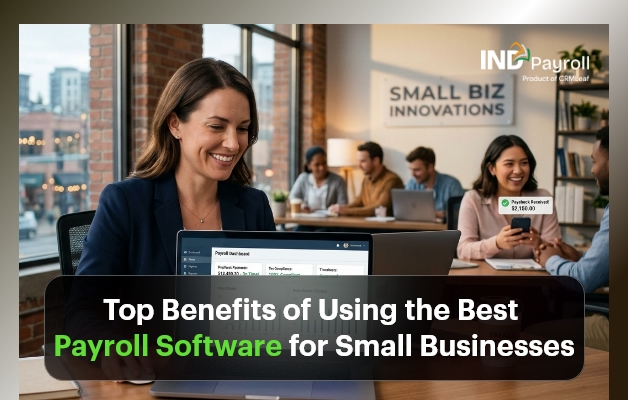
Top Benefits of Using the Best Payroll Software for Small Businesses

Managing employee salaries, tax deductions, and statutory compliance can be complex for growing companies. Many small businesses initially handle payroll manually, but as teams expand, the process quickly becomes time-consuming and error-prone. Therefore, investing in the best payroll software for small businesses becomes essential.

Modern payroll solutions automate calculations, generate reports, ensure compliance, and streamline salary processing. As a result, companies can focus more on growth and less on administrative tasks. In this guide, we explore the top benefits of using the best payroll software for small businesses, along with key features, implementation tips, and why automation is critical for modern organisations.

India’s #1 Free Software

Free Payroll, PF, ESI & TDS Software

What Is Payroll Software?

Payroll software is a digital system that automates the management of employee salaries, tax deductions, bonuses, benefits, and compliance filings. Instead of performing payroll calculations manually, businesses can process salaries in minutes using automated tools.

The best payroll software for small businesses typically includes features such as:

  • Salary calculation automation
  • Tax and statutory compliance management
  • Payslip generation
  • Employee data management
  • Attendance and leave integration
  • Reporting and analytics

Because payroll involves sensitive financial data, modern payroll systems also provide secure storage and encryption for employee records.

Why Small Businesses Need Payroll Automation

Small businesses often operate with limited HR staff. Consequently, manual payroll processing can create delays, errors, and compliance risks.

Using the best payroll software for small businesses helps organisations:

  • Reduce administrative workload
  • Improve payroll accuracy
  • Ensure timely salary payments
  • Maintain compliance with tax regulations

Additionally, automated payroll systems can reduce payroll errors and save significant time every month by eliminating manual calculations and paperwork.

Challenges Businesses Face Without a Dedicated Payroll System

Many small business owners still rely on spreadsheets or manual calculations to run payroll. However, this approach is both risky and inefficient. Without the right payroll software for small businesses, owners frequently face the following challenges:

  • Calculation errors in TDS, PF, and ESI that trigger government penalties
  • Missed statutory deadlines that attract interest under Section 234E
  • Hours of manual data entry that reduce productivity
  • Difficulty scaling payroll processes as the team grows
  •  Lack of a proper audit trail, which creates legal risk during assessments

Consequently, investing in payroll software for small businesses is not just a convenience — it is a strategic necessity. Now, let us examine the specific benefits in detail.
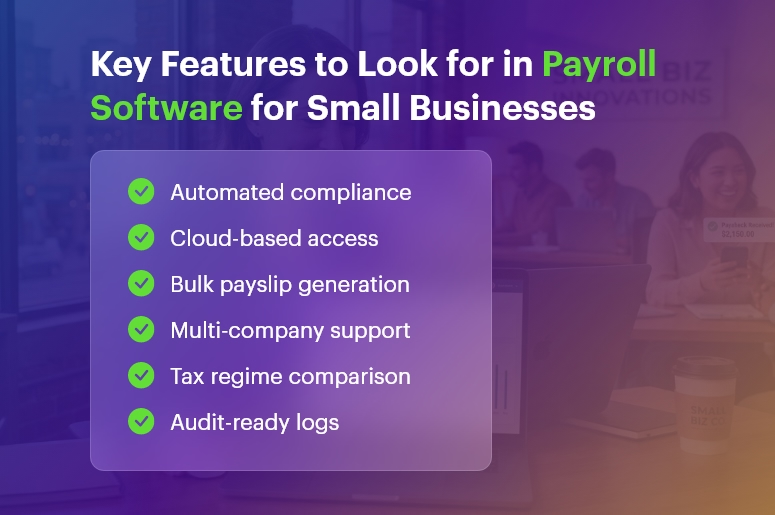
Key Features to Look for in Payroll Software for Small Businesses

Top Benefits of Payroll Software for Small Businesses

1. Significant Time Savings

The most immediate advantage of payroll software for small businesses is how dramatically it cuts processing time. Manual payroll can consume two to three working days each month. In contrast, INDPayroll lets you complete a full payroll run in just 15 minutes — freeing your team to focus on growth rather than data entry.

2. Automated Statutory Compliance

Compliance is the most critical reason businesses adopt payroll software for small businesses. Indian labour laws change frequently, and a single missed deadline can result in heavy penalties. Reliable platforms automatically calculate EPF, ESI, TDS, and Professional Tax, and generate ready-to-upload return files for ECR, challans, Form 24Q, and FVU — so you are always audit-ready and never fined.

3. Zero Calculation Errors

Human error is inevitable with spreadsheets. A single wrong formula can miscalculate salaries for your entire workforce. Automated systems use validated algorithms to deliver 100% accuracy every time. Furthermore, built-in reconciliation checks flag any discrepancies before you approve the payroll run — so your employees always receive the correct amount on time.

4. Cost Reduction and Better ROI

Many owners assume switching is an added expense. In reality, the opposite is true. Most paid payroll software for small businesses charges ₹500–₹1,000 per employee per month — that is over ₹50,000 per year for a 50-person team. INDPayroll, however, is completely free. Additionally, eliminating even one penalty from a compliance error saves far more than any software subscription.

5. Employee Self-Service Portal

A standout feature of modern payroll software for small businesses is the employee self-service portal. Employees can independently view payslips, check tax projections, download Form 16, and submit investment proofs — without raising HR queries. As a result, your team spends less time on routine requests and more time on strategic work.

6. Smart Analytics and Reporting

Beyond processing payroll, the best platforms deliver powerful reporting. Real-time dashboards give you visibility into CTC trends, department-wise costs, tax liabilities, and potential leakages. Consequently, you can make data-driven financial decisions well before the financial year ends — turning your payroll system into a genuine strategic tool.

Free Payroll, PF, ESI & TDS Software

The most trusted automation tool for modern Indian businesses.

Who Should Use Payroll Management Software?

Payroll software for small businesses is not limited to any particular industry or company size. In fact, it delivers value across a wide range of organisations:

  • Startups and SaaS companies: Automate ESOPs, TDS, and rapid headcount growth
  • Manufacturing firms: Manage complex shift rosters and ESI for factory workers
  • Construction companies: Track daily wages for on-site workers and contractors
  • CA firms and tax consultants: Manage payroll for multiple clients from one centralised dashboard
  • Educational institutions: Handle faculty pay, gratuity, and leave encashment
  • Retail chains: Process distributed outlet staff payroll efficiently

Regardless of your industry, if you pay salaries to employees, you need payroll software for a small business. Is it that straightforward?

Common Payroll Mistakes That Automated Payroll Systems Prevent

Understanding the mistakes that payroll software for small businesses prevents helps you appreciate its full value. Here are the most common payroll errors that businesses make — and how the right software eliminates them:

  • Misclassifying employees vs. contractors: Payroll software for small businesses clearly separates these categories for correct tax treatment
  • Missing PF/ESI deadlines: Automated reminders and ready-to-upload challans ensure timely filings
  • Incorrect TDS calculations: Algorithm-driven tax projections eliminate guesswork
  • Failing to update salary structures: Cloud-based payroll software for small businesses makes real-time updates simple
  • Inadequate record-keeping: Digital audit trails replace paper-based filing

How to Switch to Payroll Software: A Step-by-Step Guide

Transitioning to payroll software for a small business is simpler than most people expect. Follow these steps to get started quickly and confidently:

  • Step 1 — Choose the right payroll software for a small business: Evaluate your needs (number of employees, compliance requirements, budget) and select a solution that fits
  • Step 2 — Sign up and configure: Most cloud-based payroll software for small businesses takes fewer than 2 minutes to set up
  • Step 3 — Import employee data: Upload existing employee records, salary structures, and PF/ESI details
  • Step 4 — Configure compliance settings: Set up EPF, ESI, TDS, and PT parameters specific to your organisation
  • Step 5 — Run your first payroll: Import attendance, verify deductions, approve, and execute — done in minutes with payroll software for small business
  • Step 6 — Generate and distribute payslips: Bulk-email password-protected payslips to all employees
  • Step 7 — File statutory returns: Download ready-to-upload annexures for PF, ESI, and TDS portals

Why INDPayroll Is the Best Payroll Software for Small Businesses in India

INDPayroll stands out as the best payroll software for small businesses in India because it combines enterprise-grade features with zero cost. Here is why thousands of Indian SMEs and CA firms trust it:

  • 100% free forever: No credit card, no hidden fees
  • 2-minute setup: Start processing payroll the same day you sign up
  • India-specific compliance: Built for EPF, ESI, TDS, PT, and dual tax regimes
  • Unlimited employees: Scale from 5 to 5,000 staff at no extra cost
  • CA-friendly dashboard: Manage multiple clients from one secure login
  • 4.8-star rated: Trusted by startups, SMEs, and growing companies nationwide
India’s #1 Free Software

Free Payroll, PF,
ESI & TDS Software

Professional compliance management for Indian businesses. 100% Free Forever.

Conclusion

Choosing the right payroll software for a small business transforms one of your most tedious monthly tasks into a fast, accurate, and fully compliant process. From saving hours of manual work and eliminating calculation errors, to delivering powerful analytics and empowering employees with self-service tools, the benefits are clear and immediate.

Moreover, with INDPayroll offering completely free payroll software for small businesses, there is no financial barrier to getting started. Visit indpayroll.com today, sign up in 2 minutes, and experience why thousands of Indian businesses trust INDPayroll to handle their payroll every month.

Frequently Asked Questions

Q1. How much does payroll software for a small business cost?

Costs vary widely. While some providers charge ₹500–₹1,000 per employee per month, solutions like INDPayroll offer completely free payroll software for small businesses with no per-employee fees and no hidden charges.

Q2. Can payroll software for small businesses handle compliance automatically?

Yes. The best payroll software for small businesses automatically calculates EPF, ESI, TDS, and PT, and generates ready-to-upload return files for all relevant portals. Furthermore, it updates its algorithms whenever the government revises rules.

Q3. Is cloud-based payroll software for small businesses secure?

Reputable payroll software for small businesses uses bank-grade encryption and secure servers to protect your data. Additionally, role-based access controls ensure that only authorised personnel can view sensitive information.

Q4. How long does it take to set up payroll software for a small business?

Most cloud-based payroll software for small businesses takes under 5 minutes to set up. INDPayroll, for example, requires just 2 minutes — and you can run your first payroll cycle the same day.

 

Why Manual Payroll Processing Is Costing You More Than You Think?

On the surface, manual payroll processing might seem manageable — especially for small teams or early-stage companies. But behind the scenes, it’s a productivity drain, a compliance risk, and a hidden cost center.

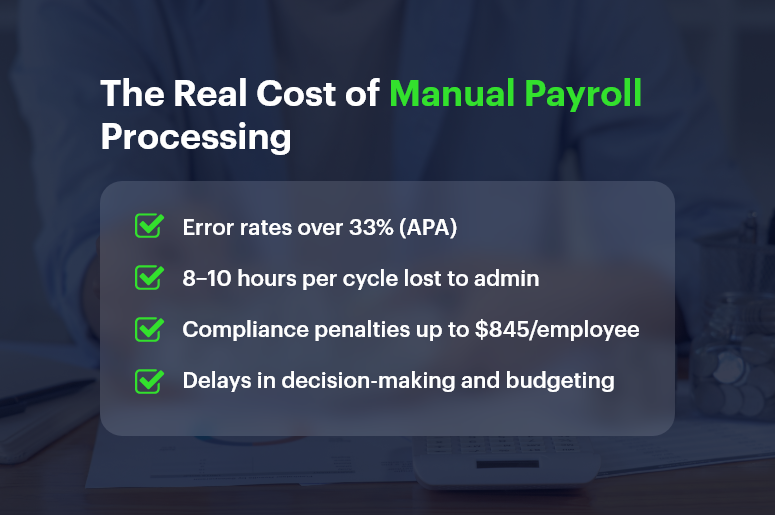
In fact, the American Payroll Association found that payroll errors affect over 33% of businesses, often costing hundreds to thousands annually per employee. And yet, many companies stick with spreadsheets and legacy systems simply because “that’s how it’s always been done.”

In this blog, we’ll explore why manual payroll processing is costing you more than you think, uncover the real-world risks, and show how platforms like CRMLeaf’s CRM + ERP help modernize payroll with automation, accuracy, and insight.

The Real Cost of Manual Payroll Processing

The Real Cost of Manual Payroll: Why This Matters to Growing Businesses

Manual processes aren’t just outdated — they’re dangerous in a fast-paced, compliance-heavy, and data-driven business world. And the impact isn’t limited to just HR.

1. Manual Means Mistakes — And Mistakes Cost Money

  • Data entry errors are common: Manually inputting hours, deductions, and tax codes opens the door to mistakes. One wrong cell and your employees get underpaid, or your business overpays taxes.
  • Fixing errors eats into productive time: HR and finance teams often spend hours fixing mistakes instead of focusing on strategic initiatives.

2. Hidden Compliance Risks Are Always Lurking

  • Tax laws change constantly: Staying updated manually across multiple jurisdictions increases the risk of fines and audits.
  • Late filings or misclassified employees can result in government penalties, legal trouble, and loss of trust.

Free Payroll, PF, ESI & TDS Software

The most trusted automation tool for modern Indian businesses.

3. Employee Experience Takes a Hit

  • Late payments or incorrect paychecks hurt morale: It’s hard to keep employees engaged if they’re constantly questioning their pay.
  • Manual processes reduce transparency: Employees may not know where to go for breakdowns, deductions, or past payslips.

4. Business Scalability Slows Down

  • Manual payroll doesn’t scale: The more employees you onboard, the harder it becomes to track benefits, bonuses, and time off accurately.
  • Disconnected systems stall decision-making: Without real-time integration between payroll, finance, and HR, you lose visibility.

From retail and manufacturing to tech startups and agencies, businesses in every industry face these bottlenecks — until they automate.

The True Costs of Manual Payroll Processing: Let’s Break It Down

You might think manual processing saves you software costs. But here’s what it’s costing:

1. Time Cost

  • Manual payroll can take 8–10 hours per cycle, depending on employee count, overtime tracking, tax calculations, and approvals.
  • Multiply that across 12–52 pay periods, and you’re talking about dozens of workdays lost annually to payroll administration.

2. Financial Risk

  • A simple mistake — like failing to withhold the correct tax — can cost businesses up to $845 per year per employee in penalties, according to the IRS.
  • Labor audits due to noncompliance often result in thousands in legal fees.

3. Opportunity Cost

  • Manual payroll drains time that could be spent on performance analysis, workforce planning, or improving employee engagement.
  • Delayed payroll insights mean you can’t react quickly to budget overruns or labor costs exceeding projections.

Best Practices: How to Eliminate the Hidden Costs of Manual Payroll

It’s time to stop treating payroll like a back-office burden and start managing it as a strategic function. Here’s how to make the shift:

1. Automate Data Collection with Integrated Time Tracking

  • Sync employee hours, leave records, overtime, and holidays with your payroll system using CRMLeaf’s unified CRM + ERP.
  • You’ll eliminate manual errors and gain real-time visibility across departments.

2. Implement Tax Rules & Compliance Workflows

  • Automate tax calculations and state-specific compliance checks within your payroll module.
  • CRMLeaf keeps tax rules up to date, so you’re always audit-ready without manual intervention.

3. Generate Reports Instantly

  • From payroll summaries to compliance reports, automation lets you run reports with one click instead of piecing together Excel sheets.
  • This makes it easier to justify expenses, analyze labor trends, and share insights with leadership.

4. Give Employees Self-Service Access

  • Empower employees with portals where they can access payslips, tax forms, and payment history — reducing HR queries by up to 40%.
  • CRMLeaf includes secure, role-based access so sensitive data stays protected.

5. Sync Payroll with Project Costs

  • When payroll data integrates with projects and budgets, you can track real-time labor costs per client or task.
  • This is crucial for consulting firms, marketing agencies, and any business with billable hours.

Customer Story: How One Business Slashed Payroll Costs with CRMLeaf

For example, TaskPro, a logistics company with 150+ employees, was managing payroll manually using spreadsheets and a legacy HR tool.

Once they switched to CRMLeaf’s payroll automation, the impact was immediate:

  • Payroll processing time dropped by 60%
  • Error rate reduced by 80%
  • Annual compliance fines went from $6,000 to zero

TaskPro also integrated payroll with its budgeting module — improving project profitability by understanding labor cost allocations in real-time.

India’s #1 Free Software

Free Payroll, PF, ESI & TDS Software

Key Takeaways: Automation Isn’t Optional Anymore

Here’s the reality — manual payroll processing is draining your time, increasing risk, and limiting your growth.

To recap:

  • Manual methods introduce more errors, which cost both money and employee trust.
  • You’re losing valuable time and missing out on insights that modern automation delivers instantly.
  • Payroll should be part of your business intelligence strategy, not just a monthly task.

With CRMLeaf’s CRM + ERP platform, payroll is integrated, automated, and optimized — so your teams can focus on strategy, not spreadsheets.

Building a Scalable Payroll System: What to Consider as You Grow?

Payroll might not be the first thing you think about when scaling your business — but it’s one of the first systems to break if not built for growth. Whether you’re hiring across multiple states, expanding internationally, or simply doubling your headcount, your payroll system must scale without bottlenecks. Inaccurate payroll, compliance issues, and poor visibility can cost your business big — not just in money, but in trust and team morale. In this post, we’ll break down what makes a scalable payroll system scalable, why it matters now more than ever, and how you can get ahead with the right tools — including the power of a CRM + ERP payroll solution.

Why Scalability Matters: The Business Case for a Future-Proof Payroll

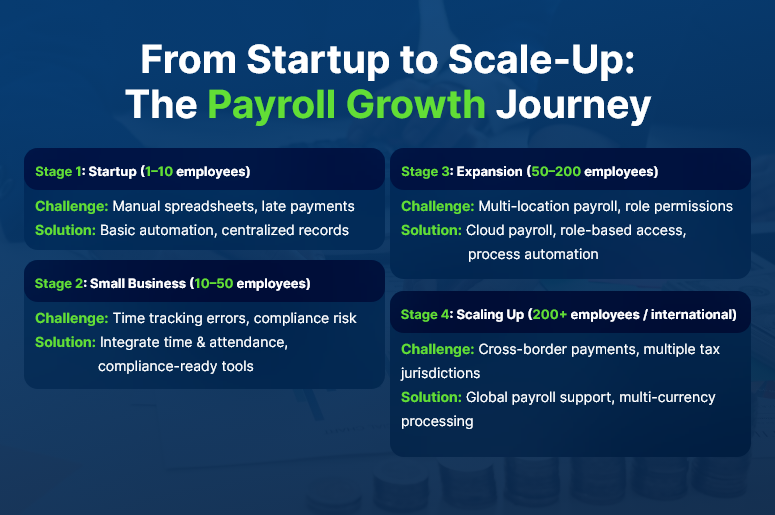
As businesses grow, so do payroll demands. New hires. More locations. Varied tax codes. Shift schedules. Contractor payments. International employees. What worked with 10 employees might become chaotic at 50 or 500.

Here’s why a scalable payroll system becomes a mission-critical investment:

  • Avoid Compliance Nightmares
    With growth comes complex labor laws, tax regulations, and cross-border rules. A scalable system automatically stays updated and reduces compliance risks.
  • Reduce Manual Errors and Admin Overload
    Spreadsheets and disconnected tools lead to duplicate entries, late submissions, and missed payments. Automation eliminates manual grunt work.
  • Support Fast-Paced Hiring and Onboarding
    Whether you’re opening a new office or onboarding seasonal workers, your payroll system should scale up quickly and painlessly.
  • Improve Employee Trust and Retention
    Timely, transparent, and accurate pay builds credibility. Late or incorrect payments? That’s a fast track to disengagement.

Industries like retail, logistics, manufacturing, and tech startups feel this pressure even more — high-volume hiring, remote teams, and compliance complexity all demand a reliable, scalable backbone.

From Startup to Scale-Up The Payroll Growth Journey

How to Build a Scalable Payroll System: 8 Actionable Strategies

1. Centralize Payroll and HR Data in One System

Avoid silos by unifying payroll, HR, and finance in a single platform. A CRM + ERP system helps ensure everyone’s working from the same data source — reducing discrepancies and delays.

2. Invest in Cloud-Based Payroll Software

Cloud solutions offer real-time access, better uptime, and built-in updates. They’re essential for growing teams and multi-location setups.

3. Automate Core Payroll Processes

From calculating wages to tax deductions and pay slip generation — automation saves time, reduces human error, and boosts efficiency.

4. Use Role-Based Access and Permissions

Ensure only authorized personnel can view/edit sensitive payroll data. This becomes more crucial as your org structure grows.

5. Plan for Multi-Currency and Global Payroll

Expanding internationally? Look for solutions that support global currencies, local tax laws, and multilingual interfaces.

6. Integrate Time Tracking and Attendance

Scalable systems sync real-time hours, shifts, and leaves automatically — reducing reconciliation headaches and disputes.

7. Enable Flexible Pay Structures

Support full-time, part-time, contract-based, and gig workers in one system. The modern workforce demands flexibility.

8. Track and Forecast Payroll Costs

Get visibility into costs by department, team, or project. Scalable payroll systems help finance teams forecast budgets accurately.

Customer Success Example

For example, SummitTech, a fast-scaling SaaS company, used CRMLeaf’s integrated payroll module to streamline multi-state compliance and reduce payroll processing time by 60%. With a rapidly growing remote team, they needed automation and visibility across HR and finance, which CRMLeaf delivered.

India’s #1 Free Software

Free Payroll, PF,
ESI & TDS Software

Professional compliance management for Indian businesses. 100% Free Forever.

Key Takeaways: Future-Proofing Your Payroll Operations

  • Scaling businesses can’t rely on spreadsheets or legacy payroll tools. You need a system that grows with you.
  • A CRM + ERP platform combines HR, payroll, and finance in one place — removing silos and driving collaboration.
  • Automation, compliance, and visibility are the pillars of scalability.

In short, building a scalable payroll system isn’t just about tech — it’s about enabling your people and processes to grow confidently.

As your team expands, your payroll system should never hold you back.

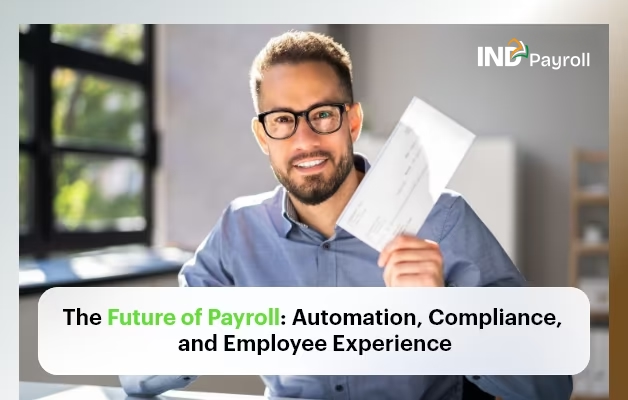
The Future of Payroll: Automation, Compliance, and Employee Experience

The future of payroll is no longer a distant vision — it’s unfolding right now. From increased government scrutiny to rising employee expectations, payroll has become a strategic function rather than just a back-office process. According to Deloitte, nearly 60% of businesses are actively modernising payroll to improve accuracy, compliance, and employee satisfaction.

If you’re still using spreadsheets or disconnected systems, you’re likely wasting time, exposing your business to compliance risks, and frustrating your team. But there’s good news — with the right tools and automation in place, payroll can become one of your most reliable, efficient, and employee-friendly workflows.

In this blog, we’ll explore:

  • Why the future of payroll is central to business growth
  • The biggest changes shaping payroll across industries
  • Practical steps to improve your payroll process today
  • How automation and a CRM + ERP platform like CRMLeaf can help

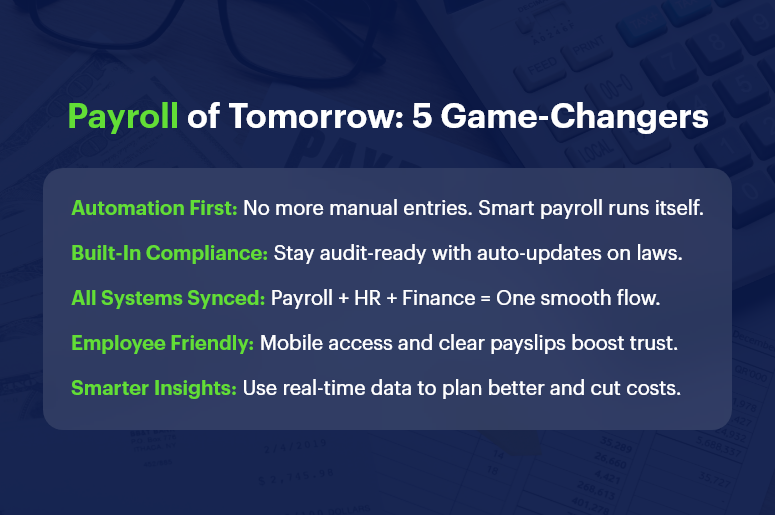
Payroll of Tomorrow 5 Game Changers

Why Payroll Modernisation Matters for Your Business

Payroll isn’t just about cutting checks. It’s a direct reflection of how your business values accuracy, compliance, and employee well-being. Here’s why modernising payroll is non-negotiable in today’s business environment:

  • High Stakes Compliance: Labour laws, tax codes, and statutory deductions change frequently. Missing a deadline or misclassifying an employee can lead to audits, penalties, or lawsuits. Automated payroll systems help you stay compliant, error-free, and audit-ready.
  • Employee Trust and Satisfaction: When employees are paid late or inaccurately, trust erodes. A well-run, transparent payroll process reinforces a culture of reliability and professionalism. This is critical for retention, especially in high-turnover industries like retail, construction, and logistics.
  • Operational Efficiency: Manual payroll is time-consuming and error-prone. Integrating payroll with your HR and finance systems eliminates duplicate work and frees up your team to focus on strategy.
  • Scalability for Growth: As your business grows, payroll becomes more complex. New tax jurisdictions, contract types, and benefit structures emerge. The future of payroll lies in scalable solutions that grow with you.
India’s #1 Free Software

Free Payroll, PF, ESI & TDS Software

What’s Driving the Future of Payroll?

Several factors are transforming how businesses handle payroll:

1. Payroll Automation is Now Essential

  • Eliminates repetitive tasks: Automation reduces the need for manual data entry, making pay cycles faster and more reliable.
  • Improves real-time accuracy: Errors are flagged instantly, ensuring accurate deductions, reimbursements, and benefits.
  • Reduces cost and labour: Businesses save money on admin hours and reduce payroll staff burden.

2. Compliance is Getting More Complex — and Critical

  • New labour laws and tax codes are being introduced across regions.
  • Freelancers, gig workers, and remote teams add complexity.
  • Automated systems ensure that every update — from tax slabs to EPF/ESI — is handled in real time.

3. Employee Experience is Tied to Payroll

  • Transparent, on-time payments build trust.
  • Features like self-service payslip access, real-time leave tracking, and reimbursement visibility empower employees.
  • A positive payroll experience enhances engagement, especially for remote and hybrid teams.

4. Integrated Platforms Are Replacing Disconnected Tools

  • Businesses using separate apps for HR, accounting, and payroll are prone to sync errors.
  • CRM + ERP platforms like CRMLeaf centralise data, reduce friction, and enable smarter decision-making.

Practical Tips: How to Prepare for the Future of Payroll

Ready to upgrade your payroll game? Here’s how to stay ahead:

Digitise and Centralise Your Payroll Data

  • Replace spreadsheets and paper forms with a centralised digital platform.
  • Choose a solution that integrates with HR, finance, and compliance tools.

Automate Key Processes

  • Automate payslip generation, tax calculations, benefit deductions, and statutory compliance.
  • Set recurring payroll schedules and alerts to eliminate delays.

Prioritise Compliance from Day One

  • Select software that updates automatically with the latest regulations.
  • Run periodic audits to detect errors before authorities do.

Empower Employees Through Self-Service Portals

  • Give employees access to their payslips, tax declarations, and leave balances.
  • Add mobile accessibility for hybrid or field-based teams.

Track Metrics and Use Payroll Analytics

  • Monitor payroll KPIs like cycle time, error rate, and cost per payslip.
  • Use insights to forecast costs and support budget planning.

Train Your HR & Finance Teams

  • Regularly update your team on system changes and compliance requirements.
  • Invest in user training during onboarding and after major updates.

Customer Success Snapshot

For example, GreenRoots Logistics, a fast-growing transportation company, used CRMLeaf’s payroll automation tools to reduce salary processing time by 75%. They integrated timesheets, leave approvals, and compliance tracking into a single workflow — all managed from one platform. This helped them ensure 100% on-time payments and a 30% drop in payroll-related queries.

Free Payroll, PF, ESI & TDS Software

The most trusted automation tool for modern Indian businesses.

Key Takeaways: Shaping the Future of Payroll

The future of payroll demands automation, real-time compliance, and a better employee experience. Businesses that continue using outdated methods will fall behind — not just in efficiency but in trust and growth.

In summary:

  • Automation isn’t optional anymore — it’s the baseline for payroll success.
  • Compliance risks are growing — using automated systems ensures peace of mind.
  • Employee satisfaction is directly tied to their payroll experience.
  • CRM + ERP platforms like CRMLeaf offer an all-in-one solution for modern payroll challenges.

Investing in the right payroll system today will future-proof your business tomorrow.

Category: EPFO & ESI

No posts in this category.

Subcategory: EPFO

Subcategory: ESI

Category: Payroll Help

No posts in this category.

Subcategory: Employee Self-Service & Engagement

Subcategory: Introduction to Payroll

Subcategory: Payroll Analytics & Reporting

Subcategory: Payroll Automation & Technology

Subcategory: Payroll for Business Growth

Subcategory: Payroll Processing & Management

Subcategory: Taxation & Compliance

Category: User Manual

No posts in this category.

Subcategory: Company Setup

Subcategory: Employee Management

Subcategory: Getting Started

Subcategory: Glossary

Subcategory: Import & Export

Subcategory: Introduction

Subcategory: Payroll Configuration

Subcategory: Payslips & Disbursement

Subcategory: Reports & Analytics

Subcategory: Running Payroll

Subcategory: Statutory Compliance & Reports

Subcategory: Troubleshooting

Subcategory: User Management & Security