Top Benefits of Using the Best Payroll Software for Small Businesses

Managing employee salaries, tax deductions, and statutory compliance can be complex for growing companies. Many small businesses initially handle payroll manually, but as teams expand, the process quickly becomes time-consuming and error-prone. Therefore, investing in the best payroll software for small businesses becomes essential.

Modern payroll solutions automate calculations, generate reports, ensure compliance, and streamline salary processing. As a result, companies can focus more on growth and less on administrative tasks. In this guide, we explore the top benefits of using the best payroll software for small businesses, along with key features, implementation tips, and why automation is critical for modern organisations.

India’s #1 Free Software

Free Payroll, PF, ESI & TDS Software

What Is Payroll Software?

Payroll software is a digital system that automates the management of employee salaries, tax deductions, bonuses, benefits, and compliance filings. Instead of performing payroll calculations manually, businesses can process salaries in minutes using automated tools.

The best payroll software for small businesses typically includes features such as:

  • Salary calculation automation
  • Tax and statutory compliance management
  • Payslip generation
  • Employee data management
  • Attendance and leave integration
  • Reporting and analytics

Because payroll involves sensitive financial data, modern payroll systems also provide secure storage and encryption for employee records.

Why Small Businesses Need Payroll Automation

Small businesses often operate with limited HR staff. Consequently, manual payroll processing can create delays, errors, and compliance risks.

Using the best payroll software for small businesses helps organisations:

  • Reduce administrative workload
  • Improve payroll accuracy
  • Ensure timely salary payments
  • Maintain compliance with tax regulations

Additionally, automated payroll systems can reduce payroll errors and save significant time every month by eliminating manual calculations and paperwork.

Challenges Businesses Face Without a Dedicated Payroll System

Many small business owners still rely on spreadsheets or manual calculations to run payroll. However, this approach is both risky and inefficient. Without the right payroll software for small businesses, owners frequently face the following challenges:

  • Calculation errors in TDS, PF, and ESI that trigger government penalties
  • Missed statutory deadlines that attract interest under Section 234E
  • Hours of manual data entry that reduce productivity
  • Difficulty scaling payroll processes as the team grows
  •  Lack of a proper audit trail, which creates legal risk during assessments

Consequently, investing in payroll software for small businesses is not just a convenience — it is a strategic necessity. Now, let us examine the specific benefits in detail.

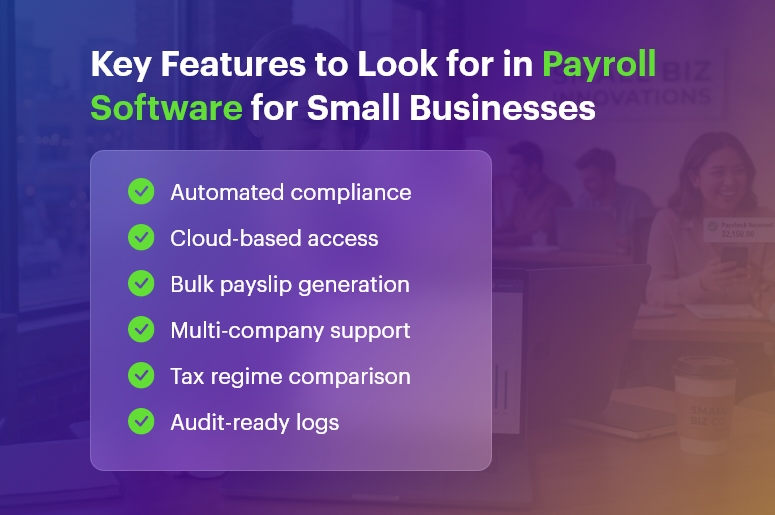
Key Features to Look for in Payroll Software for Small Businesses

Top Benefits of Payroll Software for Small Businesses

1. Significant Time Savings

The most immediate advantage of payroll software for small businesses is how dramatically it cuts processing time. Manual payroll can consume two to three working days each month. In contrast, INDPayroll lets you complete a full payroll run in just 15 minutes — freeing your team to focus on growth rather than data entry.

2. Automated Statutory Compliance

Compliance is the most critical reason businesses adopt payroll software for small businesses. Indian labour laws change frequently, and a single missed deadline can result in heavy penalties. Reliable platforms automatically calculate EPF, ESI, TDS, and Professional Tax, and generate ready-to-upload return files for ECR, challans, Form 24Q, and FVU — so you are always audit-ready and never fined.

3. Zero Calculation Errors

Human error is inevitable with spreadsheets. A single wrong formula can miscalculate salaries for your entire workforce. Automated systems use validated algorithms to deliver 100% accuracy every time. Furthermore, built-in reconciliation checks flag any discrepancies before you approve the payroll run — so your employees always receive the correct amount on time.

4. Cost Reduction and Better ROI

Many owners assume switching is an added expense. In reality, the opposite is true. Most paid payroll software for small businesses charges ₹500–₹1,000 per employee per month — that is over ₹50,000 per year for a 50-person team. INDPayroll, however, is completely free. Additionally, eliminating even one penalty from a compliance error saves far more than any software subscription.

5. Employee Self-Service Portal

A standout feature of modern payroll software for small businesses is the employee self-service portal. Employees can independently view payslips, check tax projections, download Form 16, and submit investment proofs — without raising HR queries. As a result, your team spends less time on routine requests and more time on strategic work.

6. Smart Analytics and Reporting

Beyond processing payroll, the best platforms deliver powerful reporting. Real-time dashboards give you visibility into CTC trends, department-wise costs, tax liabilities, and potential leakages. Consequently, you can make data-driven financial decisions well before the financial year ends — turning your payroll system into a genuine strategic tool.

Free Payroll, PF, ESI & TDS Software

The most trusted automation tool for modern Indian businesses.

Who Should Use Payroll Management Software?

Payroll software for small businesses is not limited to any particular industry or company size. In fact, it delivers value across a wide range of organisations:

  • Startups and SaaS companies: Automate ESOPs, TDS, and rapid headcount growth
  • Manufacturing firms: Manage complex shift rosters and ESI for factory workers
  • Construction companies: Track daily wages for on-site workers and contractors
  • CA firms and tax consultants: Manage payroll for multiple clients from one centralised dashboard
  • Educational institutions: Handle faculty pay, gratuity, and leave encashment
  • Retail chains: Process distributed outlet staff payroll efficiently

Regardless of your industry, if you pay salaries to employees, you need payroll software for a small business. Is it that straightforward?

Common Payroll Mistakes That Automated Payroll Systems Prevent

Understanding the mistakes that payroll software for small businesses prevents helps you appreciate its full value. Here are the most common payroll errors that businesses make — and how the right software eliminates them:

  • Misclassifying employees vs. contractors: Payroll software for small businesses clearly separates these categories for correct tax treatment
  • Missing PF/ESI deadlines: Automated reminders and ready-to-upload challans ensure timely filings
  • Incorrect TDS calculations: Algorithm-driven tax projections eliminate guesswork
  • Failing to update salary structures: Cloud-based payroll software for small businesses makes real-time updates simple
  • Inadequate record-keeping: Digital audit trails replace paper-based filing

How to Switch to Payroll Software: A Step-by-Step Guide

Transitioning to payroll software for a small business is simpler than most people expect. Follow these steps to get started quickly and confidently:

  • Step 1 — Choose the right payroll software for a small business: Evaluate your needs (number of employees, compliance requirements, budget) and select a solution that fits
  • Step 2 — Sign up and configure: Most cloud-based payroll software for small businesses takes fewer than 2 minutes to set up
  • Step 3 — Import employee data: Upload existing employee records, salary structures, and PF/ESI details
  • Step 4 — Configure compliance settings: Set up EPF, ESI, TDS, and PT parameters specific to your organisation
  • Step 5 — Run your first payroll: Import attendance, verify deductions, approve, and execute — done in minutes with payroll software for small business
  • Step 6 — Generate and distribute payslips: Bulk-email password-protected payslips to all employees
  • Step 7 — File statutory returns: Download ready-to-upload annexures for PF, ESI, and TDS portals

Why INDPayroll Is the Best Payroll Software for Small Businesses in India

INDPayroll stands out as the best payroll software for small businesses in India because it combines enterprise-grade features with zero cost. Here is why thousands of Indian SMEs and CA firms trust it:

  • 100% free forever: No credit card, no hidden fees
  • 2-minute setup: Start processing payroll the same day you sign up
  • India-specific compliance: Built for EPF, ESI, TDS, PT, and dual tax regimes
  • Unlimited employees: Scale from 5 to 5,000 staff at no extra cost
  • CA-friendly dashboard: Manage multiple clients from one secure login
  • 4.8-star rated: Trusted by startups, SMEs, and growing companies nationwide
India’s #1 Free Software

Free Payroll, PF,
ESI & TDS Software

Professional compliance management for Indian businesses. 100% Free Forever.

Conclusion

Choosing the right payroll software for a small business transforms one of your most tedious monthly tasks into a fast, accurate, and fully compliant process. From saving hours of manual work and eliminating calculation errors, to delivering powerful analytics and empowering employees with self-service tools, the benefits are clear and immediate.

Moreover, with INDPayroll offering completely free payroll software for small businesses, there is no financial barrier to getting started. Visit indpayroll.com today, sign up in 2 minutes, and experience why thousands of Indian businesses trust INDPayroll to handle their payroll every month.

Frequently Asked Questions

Q1. How much does payroll software for a small business cost?

Costs vary widely. While some providers charge ₹500–₹1,000 per employee per month, solutions like INDPayroll offer completely free payroll software for small businesses with no per-employee fees and no hidden charges.

Q2. Can payroll software for small businesses handle compliance automatically?

Yes. The best payroll software for small businesses automatically calculates EPF, ESI, TDS, and PT, and generates ready-to-upload return files for all relevant portals. Furthermore, it updates its algorithms whenever the government revises rules.

Q3. Is cloud-based payroll software for small businesses secure?

Reputable payroll software for small businesses uses bank-grade encryption and secure servers to protect your data. Additionally, role-based access controls ensure that only authorised personnel can view sensitive information.

Q4. How long does it take to set up payroll software for a small business?

Most cloud-based payroll software for small businesses takes under 5 minutes to set up. INDPayroll, for example, requires just 2 minutes — and you can run your first payroll cycle the same day.


Why Manual Payroll Fails Growing Businesses in India?

At first, spreadsheets may seem manageable. However, as headcount increases, regulations tighten, and salary structures become complex, manual payroll quickly turns into a business risk.

For growing businesses in India, payroll is no longer just about salary calculation. Instead, it involves compliance, accuracy, timeliness, reporting, and employee trust. This is exactly why manual payroll starts failing — and why automation becomes unavoidable.

In this blog, you’ll learn why manual payroll fails growing businesses in India, what risks it creates, and how automation solves these challenges end-to-end.

Free Payroll, PF, ESI & TDS Software

The most trusted automation tool for modern Indian businesses.

What Is Manual Payroll?

Manual payroll refers to managing salary calculations, deductions, compliance, and payslips using spreadsheets, emails, and disconnected tools.

Typically, HR or finance teams:

  • Calculate salaries in Excel
  • Manually apply PF, ESI, PT, and TDS
  • Upload challans on government portals
  • Share payslips via email

Initially, this works. However, as teams grow, the system starts breaking down.

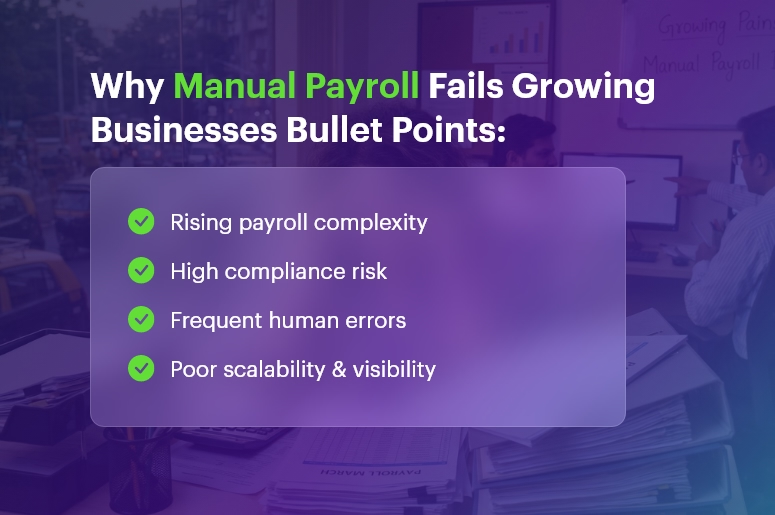
Why Manual Payroll Fails Growing Businesses Bullet Points

Why Manual Payroll Fails Growing Businesses in India

1. Payroll Complexity Increases Rapidly with Growth

As employee count rises, payroll rules multiply. New salary components, multiple pay structures, variable pay, bonuses, and deductions add complexity.

Because manual systems lack built-in logic, errors increase with every change. As a result, payroll becomes fragile and unreliable.

2. Indian Statutory Compliance Is Too Complex to Manage Manually

India’s payroll compliance landscape is demanding. Businesses must manage:

  • Provident Fund (PF)
  • Employee State Insurance (ESI)
  • Professional Tax (PT)
  • Income Tax (TDS)
  • State-wise rules and slabs
  • Monthly, quarterly, and annual filings

Since regulations change frequently, manual payroll struggles to keep up. Consequently, compliance risks grow silently.

3. Human Errors Become Inevitable

Manual payroll depends heavily on human accuracy. Unfortunately, even a small mistake can lead to:

  • Incorrect salary payouts
  • Wrong tax deductions
  • Compliance penalties
  • Employee dissatisfaction

Because spreadsheets lack validation and automation, errors often go unnoticed until employees raise concerns.

4. Payroll Processing Consumes Too Much Time

Manual payroll requires repetitive tasks every month. Teams must:

  • Verify attendance and leave data
  • Update salary changes
  • Recheck calculations
  • Prepare compliance files

As a result, HR and finance teams spend days on payroll instead of focusing on strategic work.

5. Scaling Across Locations Becomes Difficult

Growing businesses often expand across cities or states. However, each state in India has different:

Manual payroll cannot scale smoothly across locations. Therefore, complexity increases faster than control.

India’s #1 Free Software

Free Payroll, PF,
ESI & TDS Software

Professional compliance management for Indian businesses. 100% Free Forever.

6. Lack of Real-Time Visibility and Reporting

Manual payroll offers limited visibility. Since data is scattered across files, managers struggle to:

  • Track payroll costs
  • Analyze salary trends
  • Prepare audit-ready reports

As a result, decision-making becomes slow and reactive.

7. Payroll Errors Damage Employee Trust

Salary accuracy directly impacts employee morale. When payroll errors happen repeatedly:

Eventually, payroll issues affect retention and employer brand.

The Hidden Cost of Manual Payroll

Although manual payroll appears cost-effective, it carries hidden costs such as:

  • Compliance penalties
  • Rework and corrections
  • Time lost on repetitive tasks
    • Employee dissatisfaction
  • Audit risks

Over time, these costs far exceed the investment in automation.

Why Payroll Automation Is the Only Sustainable Solution

Payroll automation replaces spreadsheets with a rule-driven, compliance-ready system. As a result:

  • Calculations become accurate
  • Compliance stays updated automatically
  • Processing time reduces drastically
  • Reporting becomes instant

Most importantly, payroll becomes predictable and stress-free.

How IndPayroll Solves These Challenges

IndPayroll is designed specifically for Indian businesses. It helps growing companies:

  • Automate salary calculations and deductions
  • Stay compliant with PF, ESI, PT, and TDS
  • Handle state-wise payroll rules with ease
  • Generate payslips and statutory reports instantly
  • Scale payroll without increasing workload

As a result, businesses move from payroll firefighting to payroll confidence.

When Should a Business Move Away from Manual Payroll?

You should consider automation if:

  • Employee count exceeds 20–30
  • Payroll processing takes more than a day
  • Compliance updates feel stressful
  • Errors occur frequently
  • HR spends too much time fixing payroll issues

If any of these sound familiar, manual payroll has already started failing.

Best Practices for Transitioning from Manual to Automated Payroll

To ensure a smooth transition:

  • Centralize employee and salary data
  • Standardize salary components
  • Choose India-compliant payroll software
  • Automate statutory calculations and filings
  • Train HR teams on payroll workflows

When done right, the transition feels effortless.

India’s #1 Free Software

Free Payroll, PF, ESI & TDS Software

Final Takeaway

Manual payroll may work for very small teams. However, it fails to grow businesses in India due to complexity, compliance pressure, and scalability limits.

Payroll automation is no longer a luxury. Instead, it is a necessity for accuracy, compliance, and growth.

If your business is scaling, it’s time to leave spreadsheets behind—and move to a smarter, automated payroll system.

Frequently Asked Questions (FAQs)

1. Why does manual payroll become risky as a company grows?

As companies grow, payroll complexity increases. Therefore, manual payroll becomes prone to calculation errors, compliance gaps, and delays that can directly impact employees and finances.

2. Is manual payroll legally compliant in India?

Manual payroll is not illegal. However, because Indian payroll laws change frequently, staying compliant manually becomes difficult. As a result, businesses face a higher risk of penalties and notices.

3. What are the most common errors in manual payroll?

Common errors include incorrect salary calculations, wrong PF or TDS deductions, missed filings, and outdated tax slabs. Consequently, these errors lead to rework and employee dissatisfaction.

4. How does manual payroll affect HR productivity?

Manual payroll consumes significant HR time every month. Therefore, HR teams spend less time on talent management and more time fixing payroll issues.

5. Can manual payroll handle PF, ESI, and TDS efficiently?

While it is possible, it is not efficient. Since each statutory component has different rules and deadlines, manual payroll struggles to manage them accurately and consistently.

6. Why do growing businesses struggle with multi-state payroll manually?

Each Indian state follows different professional tax and labour welfare rules. As a result, managing multi-state payroll manually increases complexity and error risk.

7. How does manual payroll impact employee trust?

Payroll errors directly affect take-home salary. Therefore, repeated mistakes reduce employee trust and increase complaints, which harms overall engagement.

8. Is manual payroll cost-effective for small teams?

Initially, it may seem cost-effective. However, as the team grows, hidden costs like errors, penalties, and time loss make manual payroll more expensive in the long run.

9. When should a business move away from manual payroll?

Businesses should switch when payroll processing becomes time-consuming, errors occur frequently, or compliance feels stressful. At that stage, manual payroll is no longer sustainable.

10. How does IndPayroll help businesses move away from manual payroll?

IndPayroll automates salary calculations, statutory compliance, and reporting. As a result, businesses eliminate manual errors, stay compliant, and scale payroll operations with confidence.

How Payroll Integrations Improve Business Productivity?

If you want to grow faster, scale smarter, and reduce errors across your organization, then understanding how payroll integrations improve business productivity is essential.

In this comprehensive guide, we explain everything from what payroll integrations are to how they deliver tangible results for businesses of all sizes.

Moreover, we provide actionable tips, transition-rich insights, and best practices so you don’t need to look elsewhere.

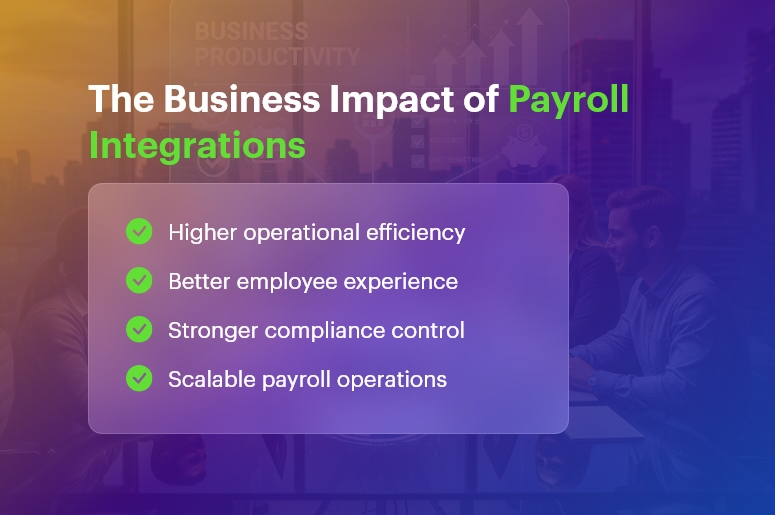
The Business Impact of Payroll Integrations

What Are Payroll Integrations?

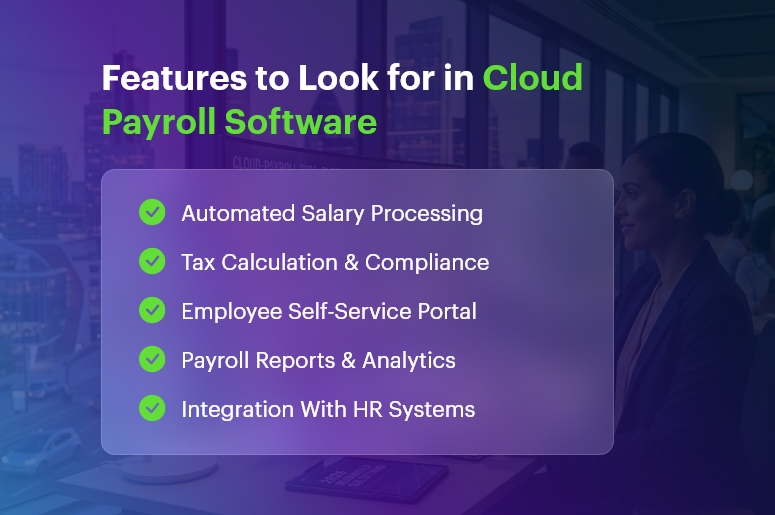
At the core, this integrations connect your payroll system with other business software such as human resources (HR), time tracking, accounting, and benefits management.

When payroll systems exchange data automatically, you say goodbye to manual entry, reconciliation errors, and wasted time.

In fact, one of the most compelling reasons businesses adopt integrations is to boost efficiency.

Most business leaders ask, “How exactly do integrations improve business productivity?” The answer lies in automation, accuracy, and seamless workflows.

India’s #1 Free Software

Free Payroll, PF,
ESI & TDS Software

Professional compliance management for Indian businesses. 100% Free Forever.

Why Payroll Integrations Matter

For years, companies relied on manual processes. Yet manual work consumes hours, introduces errors, and frustrates employees. Fortunately, the integrations solve these challenges by enabling automatic data flow between systems.

To explain clearly:

  • Time and Attendance Systems connect to payroll so that hours worked flow instantly into pay calculations. Therefore, teams don’t re-enter timesheets.
  • HR Platforms sync employee data so that changes in status, pay grade, or benefits automatically update in payroll.
  • Accounting Software receives payroll data for financial reporting without manual export or import.

When you integrate systems this way, payroll integrations improve business productivity by eliminating redundant tasks and accelerating workflows.

Top Benefits of Payroll Integrations

Now that we understand what this integrations are, let’s explore the real value they provide.

1. Eliminate Manual Data Entry

One of the most obvious ways payroll integrations improve business productivity is by removing manual data transfer. Instead of copying hours, pay rates, and deductions across systems, integrations handle it automatically.

Thus, HR and payroll staff save countless hours every pay cycle.

2. Reduce Errors and Compliance Risks

Human error is costly. Even a misplaced digit can result in underpaying an employee or triggering compliance violations.

Consequently, businesses that leverage payroll integrations see fewer mistakes. Because the systems speak directly to each other, accuracy increases and compliance risk decreases. Therefore, these integrations improve business productivity by protecting your organization and preserving employee trust.

3. Speed Up Payroll Processing

Time saved on manual tasks translates directly into speed. When systems exchange data without friction, payroll can process more quickly and with confidence.

Accordingly, your finance team can close books faster, and your HR team can focus on strategic initiatives rather than data cleanup. This is yet another way payroll integrations improve business productivity.

4. Improve Visibility and Reporting

With integrated systems, data isn’t trapped in silos. Instead, leaders access real-time insights across payroll, HR, and finance.

Therefore, you can generate meaningful reports instantly without waiting for manual consolidation. As a result, payroll integrations improve business productivity by enabling smarter decision-making.

5. Enhance Employee Experience

Employees expect fast and accurate pay. When payroll integrates with leave management, time tracking, and benefits systems, employees benefit from a smooth experience with fewer pay issues.

Naturally, this increases engagement and reduces HR support inquiries — further evidence that the integrations improve business productivity.

Related Systems That Benefit from Payroll Integrations

“Payroll doesn’t operate in isolation,” you might think. That’s correct. A modern technology ecosystem requires integrations across multiple platforms.

Below are the key systems that tie into payroll and amplify productivity:

HR Information Systems (HRIS)

An HRIS houses employee records, job roles, benefits, and performance data. When payroll syncs seamlessly with HRIS:

  • New hire data flows instantly
  • Pay rate changes update automatically
  • Terminations close out correctly

Thus, integrations improve business productivity by avoiding duplicated updates.

Time & Attendance Platforms

These tools track worked hours, overtime, and leave. When they integrate with payroll:

  • Time records flow automatically into pay runs
  • PTO balances update accurately
  • Compliance with labor laws improves

Clearly, this connection drives productivity by reducing reconciliation work and ensuring accuracy.

Benefits Administration Systems

Benefits information such as insurance, retirement contributions, and deductions must feed into payroll accurately.

Because benefits systems integrate with payroll, changes in coverage update without manual entry — another proof point of how payroll integrations improve business productivity.

Accounting and Financial Software

Payroll generates expenses, taxes, and liabilities that must appear in accounting. Integrations ensure that payroll data appears where it should in your financial records.

Consequently, integrations improve business productivity by eliminating dual entry and accelerating month-end close.

India’s #1 Free Software

Free Payroll, PF, ESI & TDS Software

How Payroll Integrations Improve Business Productivity: Real-Life Examples

To make this more concrete, here are practical examples of how businesses benefit.

Example 1: Faster Onboarding

Before integration, HR staff manually entered every new employee into payroll. Now, onboarding in the HR system automatically creates a payroll record. Therefore, staff save hours weekly and avoid errors.

This direct automation is how integrations improve business productivity—fewer touches, less time, superior accuracy.

Example 2: Automated Time Tracking to Payroll

A manufacturing company integrated its time clocks with payroll. Consequently, they eliminated hundreds of hours of weekly data entry. Errors dropped significantly, compliance improved, and payroll closed rapidly each pay period.

This concrete outcome once again shows how payroll integrations improve business productivity.

Implementation Guide: How to Integrate Payroll Successfully

So far, you know the benefits and systems involved. Next, here’s how to implement integrations effectively.

1. Define Objectives Clearly

Start by defining what you want to achieve. For example:

  • Do you want to eliminate manual entry?
  • Do you need more accurate reporting?
  • Do you want automatic benefits reconciliation?

When you articulate these goals, you understand how payroll integrations improve business productivity for your organization.

2. Select Compatible Software

Not all systems integrate easily. Therefore, choose payroll, HR, and related software that support open APIs or pre-built connectors. If you select compatible systems from the start, integration will be smoother and more effective.

This decision directly impacts how integrations improve business productivity.

3. Map Your Data Flows

Next, document what fields need to flow between systems — for example, employee IDs, hours worked, benefits codes, tax details, and pay rates.

When you map these flows upfront, you reduce confusion and minimize implementation delays. This preparation reinforces how payroll integrations improve business productivity.

4. Plan for Testing

Before going live, test thoroughly. Confirm that data moves correctly, calculations remain intact, and exceptions trigger alerts. Without testing, you risk broken processes, which defeats the purpose of integrations.

Thorough testing is crucial to show how integrations improve business productivity in practice.

5. Train Users

Even the best systems fail without user adoption. Train HR, payroll, and finance teams to understand the integration and how it changes their process.

Proper training ensures teams embrace changes and realize how payroll integrations improve business productivity.

Common Challenges and How to Overcome Them

Despite the clear benefits, some businesses encounter obstacles.

Data Quality Issues

If source data is inconsistent, integrations yield poor results. To mitigate this:

  • Clean existing data
  • Standardize formats
  • Use validation rules

This improves accuracy and reinforces how integrations improve business productivity.

Integration Costs

Initial costs can concern some organizations. However, you must consider the long-term ROI. Automation saves time and reduces errors. When you calculate total savings, you see how payroll integrations improve business productivity outweighs upfront investment.

Change Management

Integrations can disrupt workflows. Therefore, communicate early, involve stakeholders, and support employees in the transition. With the right approach, teams will adopt new processes and appreciate how integrations improve business productivity.

Best Practices for Payroll Integration Success

To derive maximum benefit, adopt these best practices:

Use Standardized Data Formats

Standardization prevents mismatches and improves consistency. This step ensures your integration functions as expected and reinforces how payroll integrations improve business productivity.

Monitor Integrations Continually

Set up automated monitoring and alerts so that if a data sync fails, your team knows immediately. This proactive stance preserves productivity — a key way integrations improve business productivity.

Document Everything

Documentation ensures clarity. When team members understand integration logic and dependencies, they can troubleshoot issues fast. This clarity supports how payroll integrations improve business productivity in daily operations.

Future Trends: Payroll Integrations and AI

Emerging technologies like artificial intelligence and machine learning are reshaping payroll. For instance:

  • AI can predict anomalies before payroll runs
  • Intelligent bots can recommend corrections
  • Systems can learn patterns and suggest process improvements

These innovations will amplify how integrations improve business productivity even further in the years ahead.

Free Payroll, PF, ESI & TDS Software

The most trusted automation tool for modern Indian businesses.

Conclusion

Now you understand the complete landscape of how payroll integrations improve business productivity. You have seen:

  • What integrations are
  • Why they matter
  • The systems that benefit
  • Real examples
  • Implementation steps
  • Challenges and best practices
  • Future trends

By adopting integrations, you eliminate manual work, reduce errors, accelerate processes, and empower your teams.

Consequently, integrations improve business productivity in every part of your organization.

If you implement these strategies thoughtfully, you’ll increase efficiency, elevate compliance, and strengthen employee satisfaction — all without needing to consult another guide.

Frequently Asked Questions (FAQ)

1. What are payroll integrations?

Payroll integrations connect payroll software with HR, time tracking, accounting, and benefits systems so data flows automatically without manual entry.

2. How do payroll integrations improve business productivity?

integrations improve business productivity by eliminating repetitive data entry, reducing errors, speeding up payroll cycles, and enabling teams to focus on strategic work instead of administrative tasks.

3. Which systems are most commonly integrated with payroll?

Payroll is most commonly integrated with HRIS, time and attendance systems, accounting software, and benefits administration platforms.

4. Can payroll integrations reduce payroll errors?

Yes. By automating data flow between systems, integrations significantly reduce manual mistakes that lead to incorrect pay, compliance issues, and employee dissatisfaction.

5. Are payroll integrations suitable for small businesses?

Absolutely. Small businesses benefit greatly from integrations because automation reduces workload, improves accuracy, and supports scalable growth without adding headcount.

6. How long does it take to implement payroll integrations?

Implementation timelines vary. Simple integrations can take a few weeks, while complex multi-system integrations may take several months depending on data complexity and testing requirements.

7. Do payroll integrations help with compliance?

Yes. integrations improve compliance by ensuring accurate time data, correct tax calculations, and consistent employee records across systems.

8. What are the common challenges with payroll integrations?

Common challenges include poor data quality, system incompatibility, upfront integration costs, and user resistance. Proper planning and training help overcome these issues.

9. Are payroll integrations secure?

Reputable integrations use encryption, secure APIs, access controls, and compliance standards to protect sensitive payroll and employee data.

10. What is the ROI of payroll integrations?

The ROI comes from time savings, reduced errors, faster payroll processing, improved compliance, and higher employee satisfaction—all of which contribute to improved business productivity.

15 Payroll Mistakes HR Managers Should Avoid

Payroll looks simple from the outside. However, in reality, payroll is one of the most complex and high-risk responsibilities HR managers handle. Even small payroll mistakes can snowball into legal penalties, employee dissatisfaction, compliance failures, and damaged trust.

Moreover, payroll errors don’t just affect numbers. They affect people. That’s why avoiding mistakes isn’t optional—it’s critical.

In this guide, you’ll learn the 15 most damaging payroll mistakes HR managers make, why they happen, how they impact organizations, and—most importantly—how to prevent them permanently.

The Most Costly Payroll Mistakes HR Must Avoid

Why Payroll Mistakes Are So Costly

Before we dive in, it’s important to understand why mistakes matter so much.

Payroll directly impacts:

  • Employee morale and trust
  • Legal and tax compliance
  • Company reputation
  • Financial forecasting
  • Audit readiness

Therefore, when HR teams repeat payroll mistakes, they lose credibility internally and invite scrutiny externally. Fortunately, most payroll errors are predictable and preventable.

India’s #1 Free Software

Free Payroll, PF, ESI & TDS Software

1. Employee Misclassification

Employee misclassification remains one of the most common mistakes. HR managers often misclassify workers as:

  • Contractors instead of employees
  • Exempt instead of non-exempt
  • Part-time instead of full-time

As a result, companies underpay wages, skip overtime, or miscalculate benefits.

How to avoid this Payroll Mistake: Regularly review job roles, working hours, and labor laws. Additionally, document classification decisions clearly.

2. Inaccurate Time and Attendance Tracking

Another frequent Payroll Mistake is relying on manual or inconsistent time tracking. When employees log hours incorrectly, payroll calculations immediately suffer.

Consequently, HR teams face disputes, corrections, and reprocessing cycles.

Prevention tip: Use automated time tracking tools that integrate directly with payroll and flag inconsistencies early.

3. Ignoring Payroll Compliance Laws

Payroll laws change frequently. Unfortunately, many HR teams fail to track updates, creating serious mistakes related to:

  • Minimum wage
  • Overtime rules
  • Statutory deductions
  • Regional labor regulations

Therefore, staying informed isn’t optional.

Best practice: Assign compliance ownership and subscribe to regulatory updates.

4. Incorrect Tax Calculations

Tax errors are among the most expensive payroll mistakes. Even a small miscalculation can result in penalties, audits, and employee dissatisfaction.

Common issues include:

  • Incorrect tax slabs
  • Missed deductions
  • Outdated tax rules

Solution: Automate tax calculations and validate them monthly.

5. Poor Payroll Record Management

Payroll documentation isn’t just for reference—it’s legally required. Missing or incomplete records lead to Payroll mistakes during audits or disputes.

This includes:

  • Payslips
  • Tax filings
  • Attendance logs
  • Adjustment records

Fix: Digitize payroll records and enforce retention policies.

6. Overlooking Overtime Compliance

Overtime errors are silent mistakes. Many HR managers either miscalculate overtime or forget eligibility rules.

As a result, employees feel cheated, and legal exposure increases.

Avoidance strategy: Configure payroll systems to auto-calculate overtime based on policy and law.

7. Inconsistent Pay Schedules

Inconsistent payroll cycles confuse employees and erode trust. This Payroll Mistake often happens due to:

  • Manual processing delays
  • Poor coordination
  • Last-minute changes

Best approach: Lock payroll calendars and communicate schedules clearly.

India’s #1 Free Software

Free Payroll, PF,
ESI & TDS Software

Professional compliance management for Indian businesses. 100% Free Forever.

8. Errors in Leave and Absence Calculations

Leave policies directly affect payroll. When HR teams miscalculate paid leave, unpaid leave, or accruals, they create recurring Payroll mistakes.

Solution: Integrate leave management with payroll to ensure accuracy.

9. Incorrect Benefit Deductions

Benefits mismanagement causes confusion and frustration. This Payroll Mistake occurs when:

  • Wrong benefit plans apply
  • Eligibility isn’t updated
  • Deductions don’t match enrollments

Prevention: Sync benefits administration with payroll systems.

10. Mishandling Payroll Adjustments

Bonuses, incentives, reimbursements, and corrections often introduce mistakes. Manual entries increase error probability.

Better way: Standardize adjustment workflows and require approvals.

11. Poor Payroll Reconciliation

Without reconciliation, Payroll mistakes go unnoticed. HR managers must compare:

  • Payroll vs. accounting records
  • Tax withholdings vs. payments
  • Headcount vs. payroll lists

Best practice: Reconcile payroll every cycle, not quarterly.

12. Lack of Payroll Audits

Skipping audits guarantees recurring mistakes. Audits reveal:

  • System misconfigurations
  • Policy mismatches
  • Compliance gaps

Recommendation: Conduct internal payroll audits at least quarterly.

13. Weak Payroll Data Security

Payroll data includes sensitive employee information. Security lapses turn into catastrophic Payroll mistakes through breaches or leaks.

Security essentials:

  • Role-based access
  • Encrypted storage
  • Audit trails

14. Overdependence on Manual Processes

Manual payroll processing multiplies mistakes. Every spreadsheet, email, and manual entry increases risk.

Smart move: Automate payroll wherever possible and eliminate redundant steps.

15. Inadequate Payroll Training

Even the best tools fail without trained users. Poor training causes repeated Payroll mistakes across cycles.

Fix: Train HR and payroll staff regularly and document processes clearly.

How Payroll Mistakes Impact Employees

mistakes don’t stay in HR—they hit employees directly. Effects include:

  • Delayed salaries
  • Incorrect payslips
  • Tax issues
  • Reduced trust

Eventually, employees lose confidence in HR and management.

How Payroll Mistakes Impact Businesses

From a business perspective, Payroll mistakes lead to:

  • Compliance penalties
  • Audit failures
  • Productivity loss
  • Brand damage
  • Legal exposure

Therefore, payroll accuracy directly supports organizational stability.

Best Practices to Eliminate Payroll Mistakes

To minimize mistakes, HR managers should:

  • Automate payroll and time tracking
  • Integrate HR, attendance, and finance
  • Stay updated on compliance
  • Audit payroll regularly
  • Train teams continuously
  • Use secure, scalable payroll systems

Free Payroll, PF, ESI & TDS Software

The most trusted automation tool for modern Indian businesses.

Final Thoughts

Payroll mistakes are expensive, damaging, and avoidable. HR managers who proactively address mistakes protect employees, strengthen compliance, and build trust.

If you want payroll accuracy, don’t fix errors after the fact. Instead, design payroll systems that prevent mistakes from happening in the first place.

Frequently Asked Questions

What are the most common Payroll mistakes?

Employee misclassification, tax errors, and time tracking issues.

How often should payroll be audited?

Monthly reviews and quarterly audits reduce mistakes significantly.

Can payroll software eliminate Payroll Mistakes?

It reduces errors, but proper setup and training remain essential.

How to Simplify Payroll for Contract, Gig & Remote Employees

Payroll was never designed for today’s workforce. Contract professionals, gig workers, and remote employees now power modern businesses. However, most payroll processes still assume fixed salaries, single locations, and uniform tax rules. As a result, businesses struggle with errors, compliance gaps, delayed payments, and operational stress. This is exactly why organizations must simplify payroll. In this comprehensive guide, you will learn how to simplify payroll for contract, gig, and remote employees using structured processes, automation, and a single purpose-built platform: INDPayroll, a 100% free payroll software designed for growing and distributed teams.

How-INDPayroll-Simplifies-Payroll-for-Modern-Workforces

Why Payroll Gets Complicated for Contract, Gig & Remote Workers

Before you can simplify payroll, you must understand why it becomes complex in the first place.

Contract, gig, and remote work introduces:

  • Multiple worker classifications
  • Variable pay structures
  • Location-based tax rules
  • Inconsistent working hours
  • Manual documentation overhead

Consequently, traditional payroll workflows break down. Teams spend more time fixing payroll issues than running payroll itself. Therefore, the first step to simplify payroll is removing manual complexity.

Free Payroll, PF, ESI & TDS Software

The most trusted automation tool for modern Indian businesses.

Step 1: Clearly Define Worker Categories

To simplify payroll, clarity comes first.

Every organization should explicitly define:

  • Contract employees – paid per agreement, responsible for their own taxes
  • Gig workers – task-based or milestone-based payments
  • Remote employees – salaried or hourly staff working from different locations

When these worker types are mixed without structure, payroll errors increase. However, when worker categories are clearly mapped inside a payroll system like INDPayroll, payroll instantly becomes easier to manage.

Step 2: Centralize Payroll in One System

Fragmented tools create fragmented payroll.

To simplify payroll, you need a single system that:

  • Manages multiple worker types
  • Automates calculations
  • Stores documentation
  • Tracks payments and compliance

INDPayroll centralizes payroll for contract, gig, and remote employees into one unified platform. More importantly, INDPayroll is 100% free, eliminating the cost barrier that prevents many businesses from upgrading their payroll processes.

By moving payroll into one system, organizations immediately simplify payroll operations and reduce dependency on spreadsheets and manual calculations.

Step 3: Automate Payroll Calculations

Manual payroll calculations are the biggest source of errors.

To truly simplify payroll, automation is non-negotiable.

INDPayroll automates:

  • Earnings calculations
  • Deductions and statutory components
  • Payment summaries
  • Payroll reports

As a result, payroll teams spend less time reconciling numbers and more time ensuring accuracy. Automation also ensures consistency, which is essential when handling contract and gig payments.

Step 4: Maintain Compliance Without Manual Effort

Compliance is where payroll usually fails.

Different employment types come with different legal obligations. If these are not tracked properly, businesses risk penalties and disputes. Therefore, to simplify payroll, compliance must be built into the system.

INDPayroll supports:

  • Structured payroll records
  • Transparent payment history
  • Audit-ready reports
  • Clear classification of worker types

By embedding compliance into everyday payroll workflows, INDPayroll removes uncertainty and helps organizations simplify payroll without relying on external tools.

India’s #1 Free Software

Free Payroll, PF,
ESI & TDS Software

Professional compliance management for Indian businesses. 100% Free Forever.

Step 5: Standardize Payroll Schedules

Unclear pay schedules create confusion and distrust.

To simplify payroll, organizations should establish consistent payment cycles for each worker type:

  • Monthly or biweekly payroll for remote employees
  • Agreed invoice-based cycles for contractors
  • Regular payout intervals for gig workers

INDPayroll allows businesses to manage these schedules within a single system. Consequently, payment delays reduce, disputes decline, and payroll communication becomes predictable.

Step 6: Simplify Documentation and Onboarding

Payroll does not start with payments. It starts with onboarding.

To simplify payroll, documentation must be standardized:

  • Contracts
  • Tax declarations
  • Payment terms
  • Bank details

INDPayroll enables centralized storage and access to payroll-related data. This ensures that payroll runs smoothly from day one and prevents repeated follow-ups for missing information.

Step 7: Gain Visibility Through Payroll Reporting

Visibility simplifies decision-making.

To simplify payroll, businesses must understand:

  • Total payroll cost
  • Payments by worker type
  • Monthly and annual payroll trends

INDPayroll provides clear payroll reports that help teams monitor expenses, forecast costs, and identify discrepancies early. With real-time visibility, payroll shifts from reactive to controlled.

Common Payroll Mistakes That Prevent Simplification

Many organizations unintentionally make payroll harder than it needs to be.

Here are common mistakes that stop teams from being able to simplify payroll:

  • Relying on spreadsheets
  • Managing contractors outside payroll systems
  • Manual tax calculations
  • No centralized payroll records
  • Paying for expensive payroll software unnecessarily

INDPayroll eliminates these issues by offering a 100% free, structured, and automated payroll platform.

Why INDPayroll Is the Best Way to Simplify Payroll

When evaluating payroll solutions, simplicity, cost, and reliability matter most.

INDPayroll stands out because:

  • It is 100% free payroll software
  • It supports contract, gig, and remote employees
  • It automates payroll calculations
  • It centralizes payroll data
  • It reduces compliance risk
  • It scales with growing teams

Instead of managing payroll through fragmented tools, INDPayroll enables organizations to simplify payroll without increasing costs or complexity.

How Simplified Payroll Impacts Business Growth

Payroll efficiency directly affects growth.

When you simplify payroll:

  • HR teams save time
  • Finance teams reduce errors
  • Workers receive timely payments
  • Compliance risks decrease
  • Leadership gains cost clarity

By removing friction from payroll, businesses can focus on expansion instead of administration.

India’s #1 Free Software

Free Payroll, PF, ESI & TDS Software

Final Thoughts

Payroll complexity is not a workforce problem. It is a system problem. To simplify payroll for contract, gig, and remote employees, businesses must adopt automation, clarity, and centralized control. INDPayroll delivers all three — without cost.

If your organization wants to simplify payroll, reduce errors, and support modern workforces efficiently, INDPayroll provides the most practical and cost-effective solution available today. Simple. Compliant. Scalable. And 100% Free.

FAQs

1. How can businesses simplify payroll for contract, gig, and remote employees?

Businesses can simplify payroll by using a centralized payroll system that supports multiple worker types, automates calculations, maintains compliance records, and standardizes pay schedules. INDPayroll enables all of this in one platform.

2. What makes payroll for contract and gig workers more complex?

Contract and gig workers often have variable pay, different tax responsibilities, and flexible schedules. Without automation and structured workflows, managing these differences manually leads to errors and delays.

3. Is INDPayroll suitable for both contract and remote employees?

Yes. INDPayroll is designed to manage payroll for contract workers, gig contributors, and remote employees within a single system, making it easier to handle diverse workforce models.

4. Is INDPayroll really 100% free payroll software?

Yes. INDPayroll is a 100% free payroll software that allows businesses to manage payroll without subscription fees or hidden costs.

5. How does INDPayroll help maintain payroll compliance?

INDPayroll helps maintain compliance by organizing payroll records, supporting clear worker classification, generating audit-ready reports, and ensuring consistent payroll documentation.

6. Can INDPayroll handle different payroll schedules?

Yes. INDPayroll allows businesses to manage multiple payroll schedules, making it easy to pay remote employees, contractors, and gig workers according to agreed timelines.

7. Does INDPayroll reduce payroll errors?

Yes. By automating payroll calculations and eliminating manual data entry, INDPayroll significantly reduces errors related to payments, deductions, and reporting.

8. How does INDPayroll help HR and finance teams save time?

INDPayroll streamlines payroll workflows, centralizes employee data, and automates repetitive tasks, allowing HR and finance teams to focus on strategic activities instead of payroll administration.

9. Can growing businesses scale payroll using INDPayroll?

Yes. INDPayroll is built to scale as businesses grow, supporting increasing headcount, multiple worker types, and higher payroll volumes without additional software costs.

10. Why should businesses choose INDPayroll over manual payroll methods?

Manual payroll methods increase errors, compliance risks, and administrative workload. INDPayroll simplifies payroll management, improves accuracy, and delivers these benefits as a 100% free payroll software.

How Automated Payroll Reduces HR Stress

Every HR professional knows payroll is one of the most stressful, detail-heavy functions in the entire organization. At the same time, HR teams must balance compliance, accuracy, timeliness, and employee satisfaction with limited time and resources. Fortunately, automated payroll reduces HR stress by eliminating repetitive tasks, reducing errors, speeding up processes, and freeing HR professionals to focus on strategic work.

In this comprehensive, practical guide, you will learn how automation reduces HR stress, why it matters, how to implement it, and how to maximize its impact across your company.

How Automated Payroll Benefits HR Stress

What Is Automated Payroll?

It is a technology-driven process that calculates wages, taxes, deductions, and benefits automatically using software.

Instead of manually calculating hours, deductions, and tax rates, an automated payroll system pulls data from time tracking tools, HR databases, and compliance libraries to produce accurate payruns with minimal human intervention.

By design, automation reduces HR stress, increases accuracy, and accelerates payroll cycles.

Why Payroll Causes Stress in HR

Payroll creates stress because it demands precision under tight deadlines. HR teams must:

  • Calculate pay accurately: This requires tracking hours, overtime, bonuses, leave, and commissions.
  • Manage taxes and compliance: Tax rates change frequently, and noncompliance carries penalties.
  • Handle benefits and deductions: Health insurance, retirement contributions, garnishments, and other deductions vary by employee.
  • Report and document: Payroll reports feed into accounting, audits, and internal planning.
  • Respond to employee questions: Employees expect clarity, speed, and transparency.

No wonder traditional payroll processes overwhelm HR teams. This is where automated payroll reduces HR stress dramatically.

India’s #1 Free Software

Free Payroll, PF,
ESI & TDS Software

Professional compliance management for Indian businesses. 100% Free Forever.

Top Ways Automated Payroll Reduces HR Stress

1. Eliminates Manual Calculations

Manual payroll calculations take hours and invite errors. In contrast, automated systems compute wages automatically based on configured rules.

By removing manual math from the equation, automation reduces HR stress and increases accuracy.

2. Ensures Compliance With Laws and Regulations

Labor laws and tax regulations change frequently. Automated payroll software updates tax tables and compliance rules automatically, ensuring your payroll is always up to date.

This means HR spends less time tracking changes and worrying about compliance penalties.

3. Reduces Errors and Risk

Human error is inevitable under pressure. Missing a decimal, misapplying a tax rate, or omitting a benefit can create costly mistakes.

Because automation reduces HR stress by catching errors upfront and enforcing consistency, HR teams can trust the numbers and avoid costly corrections.

4. Saves Time With Integrated Systems

Integration matters. When your payroll software connects with time tracking, benefits administration, and HR databases, data flows automatically. This eliminates duplicate data entry and ensures consistency.

Consequently, automation reduces HR stress by cutting administrative overhead.

5. Improves Reporting and Insights

Automated payroll systems generate reports instantly. Whether you need departmental cost breakdowns, tax filings, or historical pay data, automated reporting gives HR the insights it needs without manual assembly.

Because it reduces HR stress around data preparation, HR can focus more on analysis and decision-making.

6. Enhances Employee Experience

Employees dislike errors and delays in pay. When payroll runs smoothly and accurately, employee satisfaction rises.

It reduces HR stress by minimizing customer service issues and enabling HR to handle questions quickly and confidently.

How Automated Payroll Reduces HR Stress in Daily Operations

To understand real-world impact, let’s examine day-to-day HR operations:

  • Streamlined Payroll Runs

With automation, data flows from time-tracking systems into payroll seamlessly. HR simply reviews and approves pay runs rather than generating them from scratch.

Thus, automation reduces HR stress by shortening payroll preparation time and cutting repetitive work.

  • Faster Adjustments

Need to update an employee’s tax status or benefit enrollment? Automated systems propagate changes across all payroll modules.

This eliminates manual intervention and ensures accuracy. Because automated payroll reduces HR stress during adjustments, HR can respond swiftly to employee life events.

  • Simplified Audits

Auditors demand documentation, trails, and accuracy. Automation systems maintain logs, reports, and documentation automatically.

This transparency helps HR complete audits with less effort. In short, automation reduces HR stress when compliance checks arrive.

  • Remote and On-Demand Access

Modern payroll tools allow HR and employees to access payroll information from anywhere. This reduces dependency on paper records and ensures that HR can answer questions in real time.

Consequently, automation reduces HR stress by supporting remote and distributed teams.

India’s #1 Free Software

Free Payroll, PF, ESI & TDS Software

Key Features That Make Automated Payroll Effective

Understanding which features deliver stress relief helps you make informed choices.

  • Real-Time Calculations

Instant updates to payroll figures reduce last-minute surprises.

  • Tax Filing Automation

Automatic filing and payments save time and prevent penalties.

  • Integration With HR Systems

Connected systems ensure data accuracy and eliminate siloed information.

  • Self-Service Employee Portals

Employees can view payslips, tax forms, and benefits independently, reducing HR inquiries.

  • Alerts and Notifications

Reminders for deadlines and exceptions help HR stay proactive.

Each of these features contributes to how automation reduces HR stress, making payroll faster, smarter, and more reliable.

Choosing the Right Automated Payroll Solution

Selecting the right system matters. To ensure your payroll solution truly reduces HR stress, evaluate the following:

  • Scalability

Choose software that grows with your business and handles multiple pay schedules, classifications, and international requirements.

  • Integration Capabilities

Verify that the payroll tool integrates with your HRIS, time tracking, benefits platform, and accounting systems.

  • Compliance Support

Ensure the solution updates tax tables, legal changes, and reporting requirements automatically.

  • Support and Training

Reliable vendor support and user training help your HR team adopt the tool smoothly.

By focusing on these criteria, you increase the likelihood that automated payroll reduces HR stress—not just in theory but in practice.

Common Misconceptions About Payroll Automation

Many HR teams hesitate to adopt payroll automation due to misconceptions:

“Automation Means No Human Control”

False. Automated payroll reduces HR stress by handling calculations, but HR still reviews, approves, and oversees payroll.

“It’s Only for Large Organizations”

Not true. Small and medium businesses benefit even more because automation eliminates manual work that small teams cannot afford.

“It’s Too Expensive”

While upfront costs exist, automated payroll reduces HR stress and delivers ROI through time saved, error reduction, and improved compliance.

Clarifying these misconceptions helps HR teams embrace automation with confidence.

Real-World Impact: Case Scenarios

Consider these examples:

Case 1: Mid-Size Tech Firm

Before automation, HR spent three days per pay run reconciling time cards. After implementing payroll automation, the firm cut that to under one day and eliminated overtime miscalculations. In this case, automated payroll reduces HR stress by removing manual reconciliation.

Case 2: Retail Chain With Variable Hours

With hourly workers and seasonal fluctuations, payroll errors were common. Automated rules captured overtime, shift differentials, and compliance automatically. Here, automated payroll reduces HR stress by standardizing complex wage calculations.

These scenarios show how automated payroll reduces HR stress across different business models.

Best Practices for a Smooth Payroll Automation Transition

To get the most value:

  • Map Your Current Process – Document existing workflows to understand where automation helps most.
  • Train Your Team – Ensure all users understand how to operate and troubleshoot the system.
  • Test Before DeploymentRun parallel payroll tests to validate accuracy.
  • Set Clear Policies – Define roles, review cycles, and approval workflows.
  • Monitor and Improve Continuously – Review reports and process performance regularly.

Following these steps ensures automated payroll reduces HR stress not just initially, but over the long term.

Free Payroll, PF, ESI & TDS Software

The most trusted automation tool for modern Indian businesses.

Conclusion

Automated payroll reduces HR stress by removing manual work, increasing accuracy, ensuring compliance, and delivering faster, more reliable payroll processes.

When implemented thoughtfully — and paired with training, integration, and continuous improvement — automation transforms payroll from a stressful chore into a strategic advantage.

Whether you lead a small business or a large enterprise, understanding how automated payroll reduces HR stress equips your organization to operate more efficiently, improve employee satisfaction, and focus HR efforts where they matter most.

Frequently Asked Questions (FAQs)

Q: How soon will automated payroll reduce HR stress after implementation?

A: Many organizations see measurable reductions in administrative workload within the first payroll cycle because repetitive manual tasks disappear.

Q: Does automated payroll remove HR jobs?

A: No. It shifts HR teams from transactional work to strategic, value-added activities like employee engagement and policy development.

Q: Can automated payroll handle compliance across different regions?

A: Yes, modern solutions update tax tables and compliance rules for multiple regions, ensuring accurate and compliant payroll processing.


Category: EPFO & ESI

No posts in this category.

Subcategory: EPFO

Subcategory: ESI

Category: Payroll Help

No posts in this category.

Subcategory: Employee Self-Service & Engagement

Subcategory: Introduction to Payroll

Subcategory: Payroll Analytics & Reporting

Subcategory: Payroll Automation & Technology

Subcategory: Payroll for Business Growth

Subcategory: Payroll Processing & Management

Subcategory: Taxation & Compliance

Category: User Manual

No posts in this category.

Subcategory: Company Setup

Subcategory: Employee Management

Subcategory: Getting Started

Subcategory: Glossary

Subcategory: Import & Export

Subcategory: Introduction

Subcategory: Payroll Configuration

Subcategory: Payslips & Disbursement

Subcategory: Reports & Analytics

Subcategory: Running Payroll

Subcategory: Statutory Compliance & Reports

Subcategory: Troubleshooting

Subcategory: User Management & Security